Wedding Photography Coverage: How Many Hours Do You Need?

A guide to choosing the right amount of coverage time for your wedding day

At some point during the initial conversations we have with couples, the question gets asked: how many hours of photography coverage do we actually need? It’s a question without a single right answer — every wedding is different, and the right amount of coverage depends entirely on how your day is planned.

We’re Midlands wedding photographers and cover weddings across Worcestershire, Warwickshire and the wider Midlands counties.  While every wedding is different, the questions couples ask about coverage tend to be remarkably similar wherever the day takes place. This guide is designed to help you work through those questions clearly, whether you’re planning an intimate register office ceremony or a full day celebration at a Midlands country house.

We’ll start with some useful context about how long different parts of a wedding day typically take. Further down you’ll find a breakdown of common coverage lengths — from two hours through to ten or more — with real wedding examples for each, so you can see how different amounts of time translate in practice.
Useful info: Typical timings for different parts of a wedding day

Before we get into actually planning your photography coverage, it’s a good idea to have an understanding of how long the various parts of a wedding day actually take, whether you’re planning a civil ceremony or are having a church wedding.

This is a rough guide only and is just intended to give you a basic idea of how things work.  This doesn’t include any travel time or how long it takes to transition from one section into the next.

  • Getting ready: From a photography perspective the longest we’d ever cover is 3 hours but 90-mins to 2 hours is more typical.  For some weddings we just cover the final 30mins or none at all.
  • Civil wedding ceremony: About 45mins, but this includes the pre-ceremony interviews you’ll need to have with the registrar.  The actual ceremony time is 20-30mins.
  • Non-legal wedding ceremony:  Some couples choose to have their ceremony be undertaken by a friend, relative or celebrant and these usually take about 15-20 minutes depending on individual plans, but can be highly personalised
  • Church of England ceremony: Typically 45mins from start to end, plus another 15-30mins for all the confetti and hugs that happen afterwards.
  • Roman Catholic wedding ceremony: 45mins to 90 mins depending on service, plus another 15-30mins for all the confetti and hugs that happen afterwards.
  • Drinks reception: This begins either after the ceremony or when everyone arrives at the reception venue and goes up to the meal time.  Includes confetti, group photos, couple photos and candid photos of everyone enjoying a drink and mingle. Typically 1hr 30mins but we do recommend longer if possible, especially for spring, autumn and winter weddings.
  • Sit-down wedding meal: This can vary a great deal but 2hrs+ is typical
  • Speeches and evening reception: As short or as long as you make them.

How our wedding photography coverage is structured

Our photography is based upon hours of coverage. Other photographers may have their own methods, but because of the broad range of coverage times we offer, we find hours to be be most flexible for you and the most efficient for us.  Hours works!

Shorter, part-day coverage: 2-4 hours.  For couples who just want the core parts of their wedding day covered.

Half Day coverage: 5-6 hours. Often enough to capture a large part of a wedding day without extending into the evening.

Full Day:  8-10+ hours.  Usually covers from the morning to the evening.

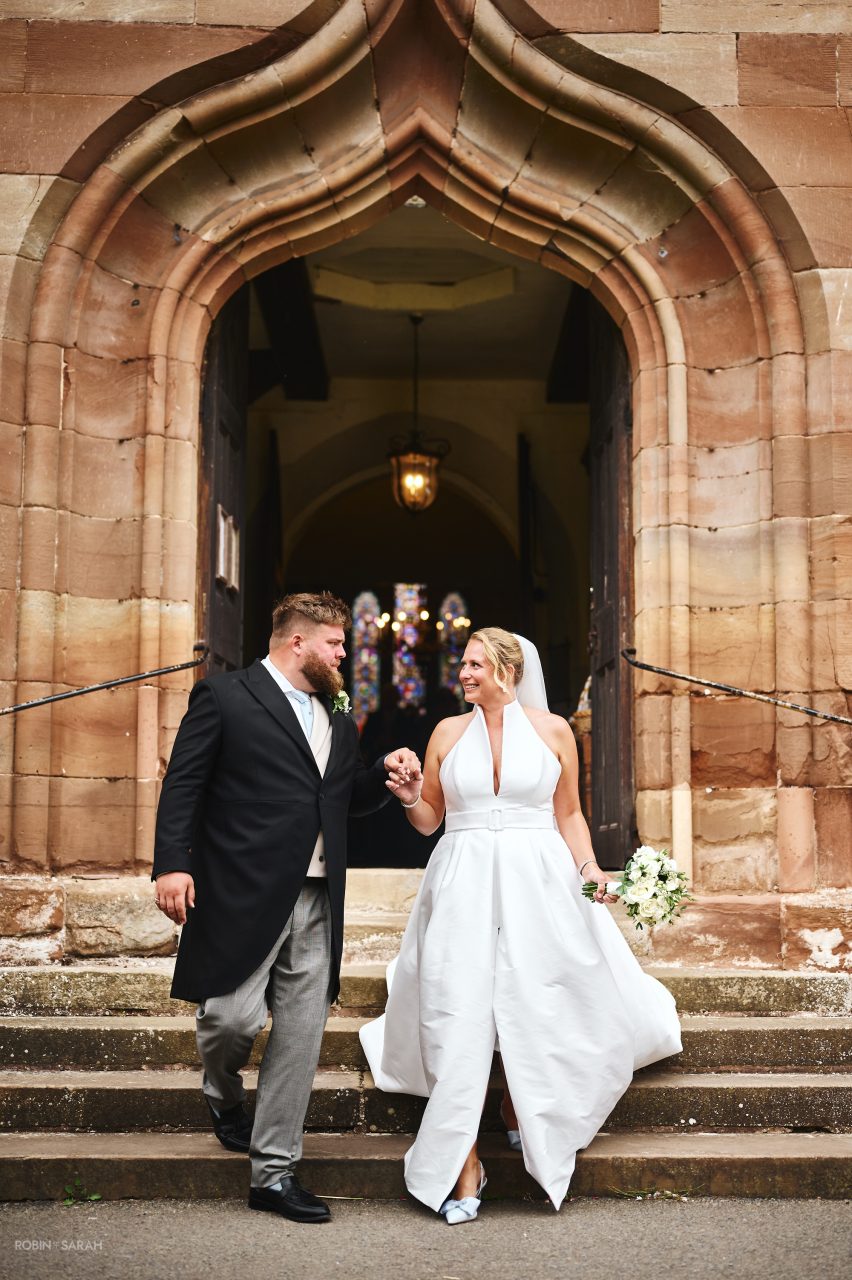
Newly married couple walk down steps at Hanbury Church in Worcestershire after wedding ceremony

How to decide how long your photography coverage should be

Simply put, the length of photography coverage should mould around your existing plans for the day rather than the other way around. Think of the structure of your day first, then look at the number of hours that best fits that, with a little bit of leeway to accommodate delays and unforeseen events.  There are a few caveats which we can discuss later, but at least at the beginning it helps to look at how photography fits to your date, rather than trying to make the schedule fit to an arbitrary number of hours of coverage.

Key questions to ask yourselves:

  • Which parts of the day do we want covered?  Decide a natural start and end point based on your own preferences. For some couples that’s just the ceremony, groups and couple photos; for others it includes morning preparations, speeches, or time on the dance floor.   Remember that coverage is usually continuous with no breaks (except for when we need to eat on longer days).  There are some examples further down the page.
  • Are our time expectations realistic?  Trying to pack too much into a short window of time can add unnecessary pressure.  Allowing breathing space not only makes the day more enjoyable for yourselves, it usually leads to more relaxed photographs as well.
  • Do we have flexibility?: Weddings rarely run exactly to schedule and timings can and do slip back, especially when travel is involved or with larger numbers of guests. Allowing ‘breathing room’ can make a huge difference to the how the day feels and will take the pressure off if something goes slightly awry.

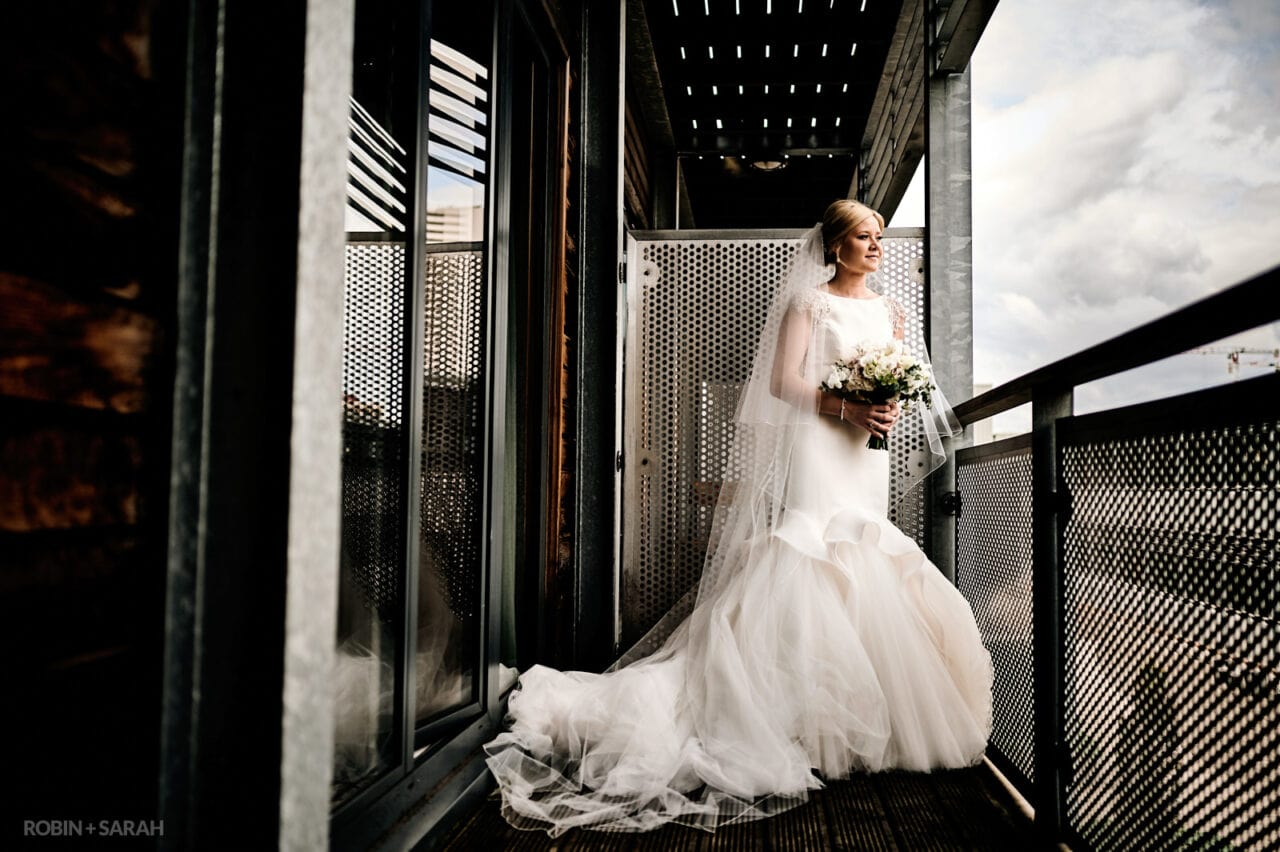
Portrait of bride in doorway surrounded by gardens

Deciding the point where photography begins

  • Starting with getting ready (or part way through it): Your photography can begin with you and you party preparing for the day.  This can be detailed coverage beginning 2 hours or so prior to when you leave for the ceremony, or it can be just the final stages.  There are no rules, it’s really just about the timings that are most appropriate for you.
  • Starting with arrivals (shortly before the ceremony): From the perspective of documentary-style photographers like us, the guests arriving is an important juncture and about 30 minutes prior to the ceremony time is the very latest we’d want to start. All the handshakes, hugs and hellos as friends and family come together at the venue before the main event begins.  It can be a lovely and often overlooked element of the wedding day.
Bride arrives at Avoncroft Museum in old white Mercedes car

Deciding when photography coverage should end

Photography coverage usually ends at a point in the day where the wedding transitions from one section to another.

  • Ending with the couple photos: tends to happen on shorter day coverage where there is little or non of the reception covered.
  • Ending at the start of the meal or speeches: The photography can finish when everyone sits down for the meal.   If your wedding speeches are before the sit-down meal then photography can end with them.
  • Ending after the first dance (plus a bit longer): This is the most popular choice for wedding coverage that extends into the evening and usually finishes around the time the evening food is served.
  • Ending later in the evening: On occasion we get asked to cover up to a point later in the evening if something special is happening like a firework display.
  • Ending at a point not mentioned above: We’re quite used to wedding days which don’t follow the prescribed patterns used by many of the traditional wedding venues.  If you have ideas of your own, we’d love to hear about them!
Bride and groom dancing, from a wedding with 8 hours of photography coverage

Examples of real weddings with different lengths of photography coverage

The examples below include real-world examples and simply give you a realistic sense of what different coverage lengths often allow time for. They’re not rigid templates — think of them as reference points to help you judge which time bracket fits your plans most comfortably.

2 hours of photography

Two hours of coverage often works well for register office or small church weddings.  It tends to work best when everything is happening at the same location, or in the immediate vicinity. If any travel between locations is required, a longer coverage length may be more realistic.

The two hour option could include:

  • Guest and couple arrivals
  • Civil wedding ceremony
  • Hugs and confetti afterwards
  • A small number of group photos
  • Couple photos and possibly a few of the reception

Example 2 hour wedding

Wedding ceremony taking place in a local town hall register office

This wedding was photographed by Robin and had a 3pm ceremony at the local register office, just a short walk from the reception venue. The couple wanted only a minimal number of group and couple photos, which allowed time for relaxed candid photography after the ceremony and a short part of the reception to be included within the two-hour window, from 2:30pm to 4:30pm.

>>Click here to see the full 2-hour wedding example

3 hours of photography

Adding an extra hour opens up several possibilities. That additional time can make the difference between a tight schedule and one that feels more relaxed, particularly if your day involves more than one venue.

Three hours of coverage often allows time for everything you might include within two hours, with the flexibility to add either the latter part of getting ready, more of the reception, or a little of both — depending on locations and travel time. It’s also a popular choice for church weddings, where the ceremony itself tends to be longer than a civil ceremony.


Typical 3 hours could include:

  • The latter part of ‘getting ready’, if required.
  • Guest and couple arrivals at the venue
  • The wedding ceremony (civil or church)
  • Hugs and confetti afterwards
  • Group photos
  • Couple photos around the venue or at another location.
  • The reception, or part of it.

Example 3 hour wedding

Group photo for small wedding in garden of beautiful venue

For this wedding, photographed by Robin, the couple had a two hour slot booked at a venue but also wanted photos taken at a private reception held at another location.  3 hours of coverage allowed plenty of breathing room for candid photos of the guests and also the of couple at both venues.

>> See more from this wedding

4 hours of photography

Four hours of coverage allows more flexibility in how the day is photographed and works particularly well for weddings held across different locations, such as a church ceremony followed by a reception elsewhere. It can also allow time to cover more of the afternoon reception, including speeches when timings allow.

With this amount of coverage, there’s usually more room for relaxed candid photographs and a longer couple photo session, or even two shorter sessions if that suits the flow of the day better.

4 hours could cover:

  • ‘Getting ready’, if required.
  • Guest and couple arrivals at the venue
  • The wedding ceremony (civil or church)
  • Hugs and confetti afterwards
  • Group photos
  • Couple photos around the venue or at another location.
  • The full afternoon reception, including speeches if they’re before the meal.

Example 4 hour wedding

Bride and groom in and around beautiful wedding venue

The wedding shown here was photographed by Robin and Sarah together and was covered from the latter part of getting ready through the church ceremony and the afternoon reception, up to the entrance to the sit-down meal. This included time for an extended couple photo session alongside relaxed coverage of guests.

>> See more from this wedding


Half-day coverage (5 or 6 hours)

Five or six hours of coverage is often enough to capture a large part of a wedding day without extending into the evening. It suits couples who want a relaxed, well-rounded record of their day but don’t need photography to run from morning through to night.

Half-day coverage can start with getting ready or shortly before the ceremony, depending on what matters most to you. From there, how the time is used depends on the shape of your day. This length often works particularly well for weddings with a longer, more informal reception, such as those held at home or in less traditional venues.

Half Day could include:

  • ‘Getting ready’, if required.
  • Guest and couple arrivals at the venue
  • The wedding ceremony (civil or church)
  • Hugs and confetti afterwards
  • Group photos
  • Couple photos around the ceremony venue
  • An longer reception which extends through the afternoon
  • An additional couple photo shoot at the reception, or nearby

Example Half Day wedding

Small wedding held at home

This half-day wedding was photographed by Robin and included coverage from the bride’s getting ready through to a 2pm church ceremony and a relaxed reception at home. The extended, informal nature of the reception allowed plenty of time for candid photographs, mixed with occasional short couple photo sessions. Coverage ran from 12pm until 6pm and focused on capturing the flow of the day without an evening party.

>> See more from this wedding

8 hours of photography

Eight hours of coverage often allows a large portion of a wedding day to be photographed and works particularly well for weddings with a later ceremony time, such as around 3pm. In these cases, it can provide coverage from earlier in the day through to the evening celebrations.

This length is also a good fit for couples who want photography into the evening party but are happy to skip morning preparations, or include only the latter part of getting ready.

With a later ceremony time, eight hours of coverage could allow time for:

  • ‘Getting ready’, if required, or the latter part of it
  • Guest and couple arrivals at the venue
  • The wedding ceremony (civil or church)
  • Hugs and confetti afterwards
  • Group photos
  • Couple photos around the venue or at another location.
  • The afternoon reception
  • Meal & speeches
  • Evening reception

Example 8 hour wedding

Bride and groom just after their wedding ceremony has finished. Taken from a wedding with 8 hours of photographic coverage

This eight-hour wedding was photographed by Robin, with all of the day’s events taking place at the same location. No getting-ready photographs were needed, so coverage began with guest arrivals and continued through the ceremony, reception and evening celebrations, finishing after the first dance as evening food was served. Coverage ran from 1pm until 9pm.

>> See more from this wedding

10 hours of photography

Ten hours of coverage often suits weddings that want photography from getting ready through to the first dance and part of the evening reception. It’s commonly chosen for wedding days with a midday or early afternoon ceremony, such as between 12pm and 2pm.

With a typical ceremony time, ten hours of coverage could allow time for:

  • ‘Getting ready’, if required.
  • Guest and couple arrivals at the venue
  • The wedding ceremony (civil or church)
  • Hugs and confetti afterwards
  • Group photos
  • Couple photos around the venue or at another location.
  • The afternoon reception
  • Meal & speeches
  • First Dance & evening reception

Example 10 hour wedding

Bride and groom walk through raised swords outside church. Taken from a wedding with 10 hours of photography coverage

This wedding was photographed by Robin and Sarah together, with morning preparations, a 1pm ceremony and the reception all taking place within the same village, keeping travel time to a minimum. Coverage ran from 10:30am until 8:30pm, allowing photographs from getting ready through to the first dance and a good portion of the evening celebrations.

>> See more from this wedding

When more than 10 hours might be useful

Occasionally, a wedding day needs a little more time than ten hours allows. This is most often the case when the ceremony is earlier in the day (for example around 11am), or when there are plans for extended evening coverage, such as a later first dance or special events like fireworks.

Additional time can also be helpful when the overall schedule is more spread out, with longer gaps, multiple locations, or moments at both the beginning and end of the day that are important to you. In these situations, extending coverage simply allows the day to be documented at a relaxed pace rather than trying to fit everything into a fixed window.

When your plans don’t fit a typical time bracket

Some wedding days don’t fit neatly into any of the examples above — and that’s completely normal. Unusual timelines, multiple locations, or a mix of shorter and longer elements can all affect how much coverage makes sense.

In these cases, it’s usually more helpful to think about which parts of the day are most important to you, and how much breathing room you want around them, rather than trying to match a specific number of hours exactly. The examples on this page are there to give context, not to act as fixed rules.

So how much coverage is right for your wedding?

Hopefully, if you’ve gone through this whole page, you’ll now have a fairly clear sense of which time bracket feels like the best fit for your day. If you recognised yourselves in one of the shorter or mid-length examples above, it’s usually a sign that you don’t need full-day coverage to tell the story of your wedding.

If your plans most closely resemble the 2–4 hour or half-day examples, you may find it helpful to read more about our small and part-day wedding photography, which is designed specifically for weddings that focus on key moments rather than all-day coverage.


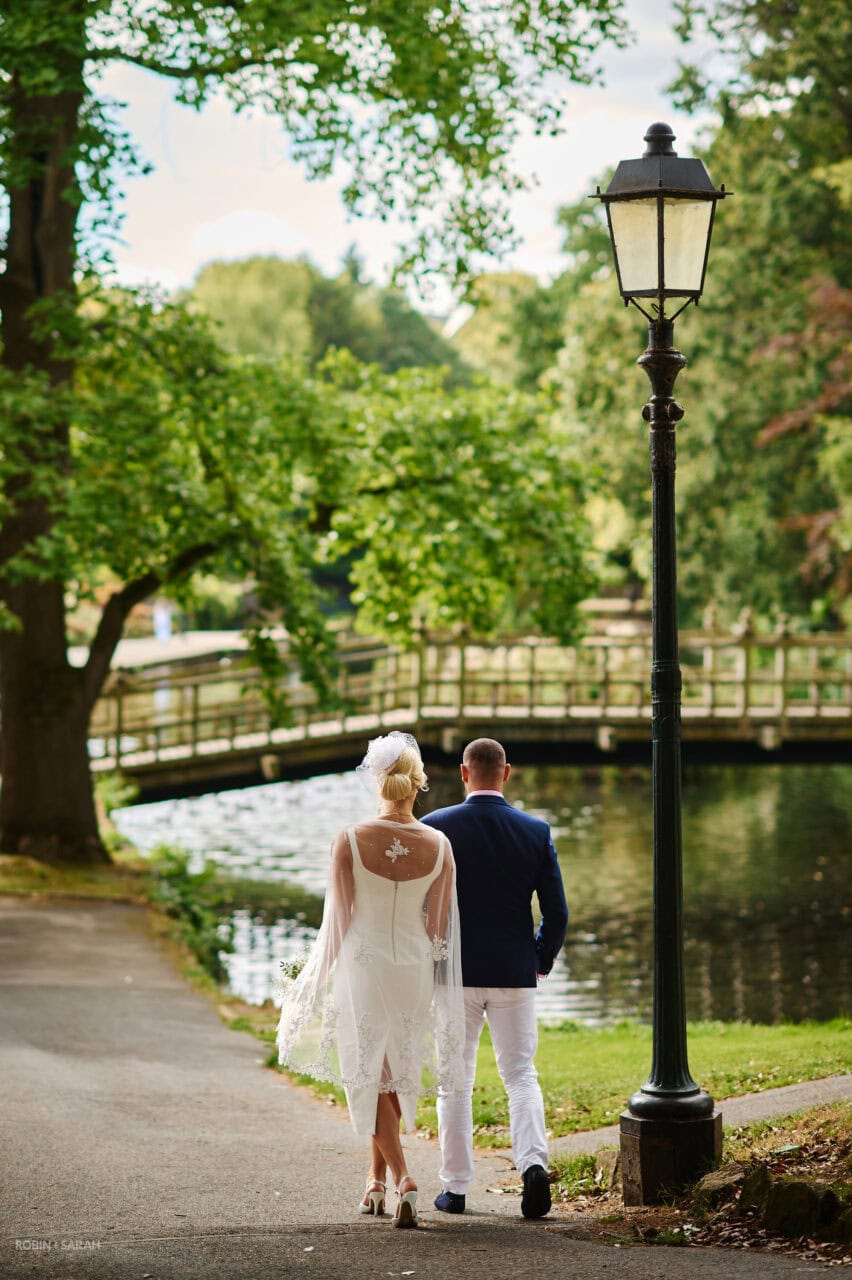
Bride and groom walk together into Priory Park in Malvern

Wedding photography coverage FAQs

We’re still not sure how many hours we need.
That’s completely normal. Many couples only arrive at a rough idea rather than a precise number. Using examples and typical timings like the ones on this page usually helps narrow things down, even if you don’t yet have a minute-by-minute plan.  The best thing we can do is to have a chat so Robin can help with his many years of experience.

Our plans aren’t fully formed yet, but we know roughly what we want.
That’s very common too. Coverage decisions don’t need to be final from the outset. Many couples start with a general idea of the parts of the day they want photographed and refine the exact timing later as their plans take shape.  All of our bookings can be extended closer to the wedding day, if required.

Our wedding is unconventional, so we’re unsure how long things will take.
Unconventional weddings often don’t fit neatly into standard timelines and that’s one of the reasons we love them!  In these cases, it’s usually more helpful to think about which moments matter most and how much breathing room you want around them, rather than trying to match a typical schedule.  Again, let’s have a chat, go through your ideas and come up with a plan for you.

What’s the shortest and longest wedding you’ve photographed?
Coverage lengths can vary a lot depending on the day. While many weddings fall into the examples shown above, some are much shorter and others much longer. Over the years, weddings we’ve photographed have ranged from super-short register office ceremonies through to long, full-day celebrations with more than one ceremony and extended evening celebrations.

Next steps

Hopefully this guide has helped you get a clearer sense of how much photography coverage makes sense for your wedding day. You don’t need every detail finalised at this stage — having a rough idea of the length and shape of your day is usually enough to move forward.

If you’d like to explore pricing and availability, you can take a look at our packages and pricing page. And if you’re ready to talk things through or check whether your date is available, you’re very welcome to get in touch and tell us about your plans.