




“We love all the photos!”
Photographing church weddings since 2007
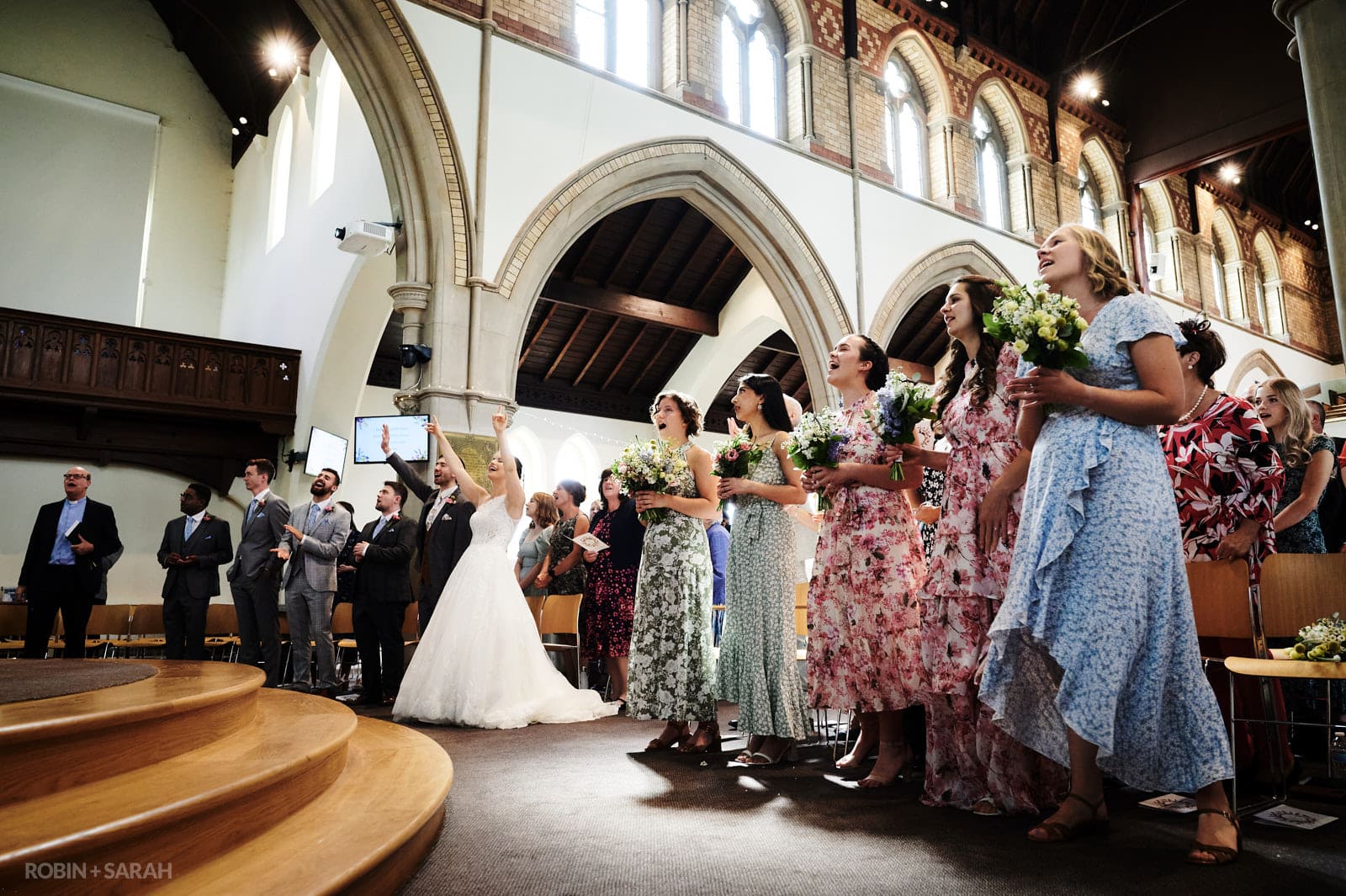
Church weddings make up a significant and much-loved part of our work. There’s a particular atmosphere to a church ceremony that’s hard to replicate anywhere else – the scale and history of the building, the quality of the light, the sense of occasion – and after more than 400 weddings we know how to make the most of it.
We are Midlands wedding photographers and we’ve photographed church weddings across Worcestershire, Warwickshire and the wider Midlands counties, from small parish churches with intimate interiors to larger, grander buildings with sweeping architectural detail. Every church is different, and every one presents its own opportunities and challenges – which is exactly what makes them so rewarding to photograph.
Church ceremonies require a different kind of attentiveness than civil services. The building itself plays a bigger role in the story, the procession and exit carry more visual weight, and the light – particularly in older stone buildings – can be demanding to work with. We handle all of that without fuss, so you can focus entirely on the ceremony itself.

Church of England and Catholic weddings
We photograph both Church of England and Catholic wedding ceremonies. Most CofE services follow a broadly similar pattern and typically last around 45 minutes, while Catholic ceremonies vary more depending on whether mass is included — with mass, the service can run to an hour and a half or more. We’re familiar with both and know what to expect from each.
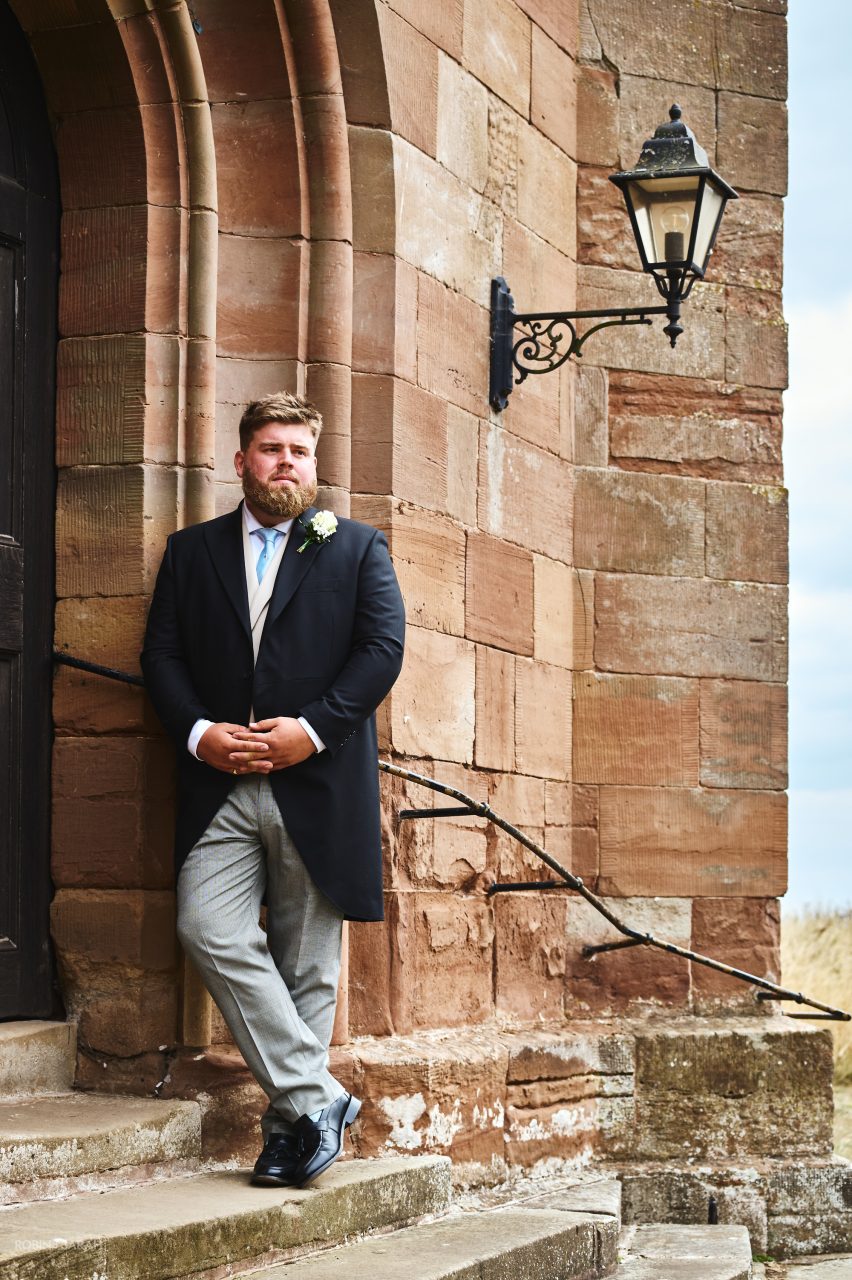
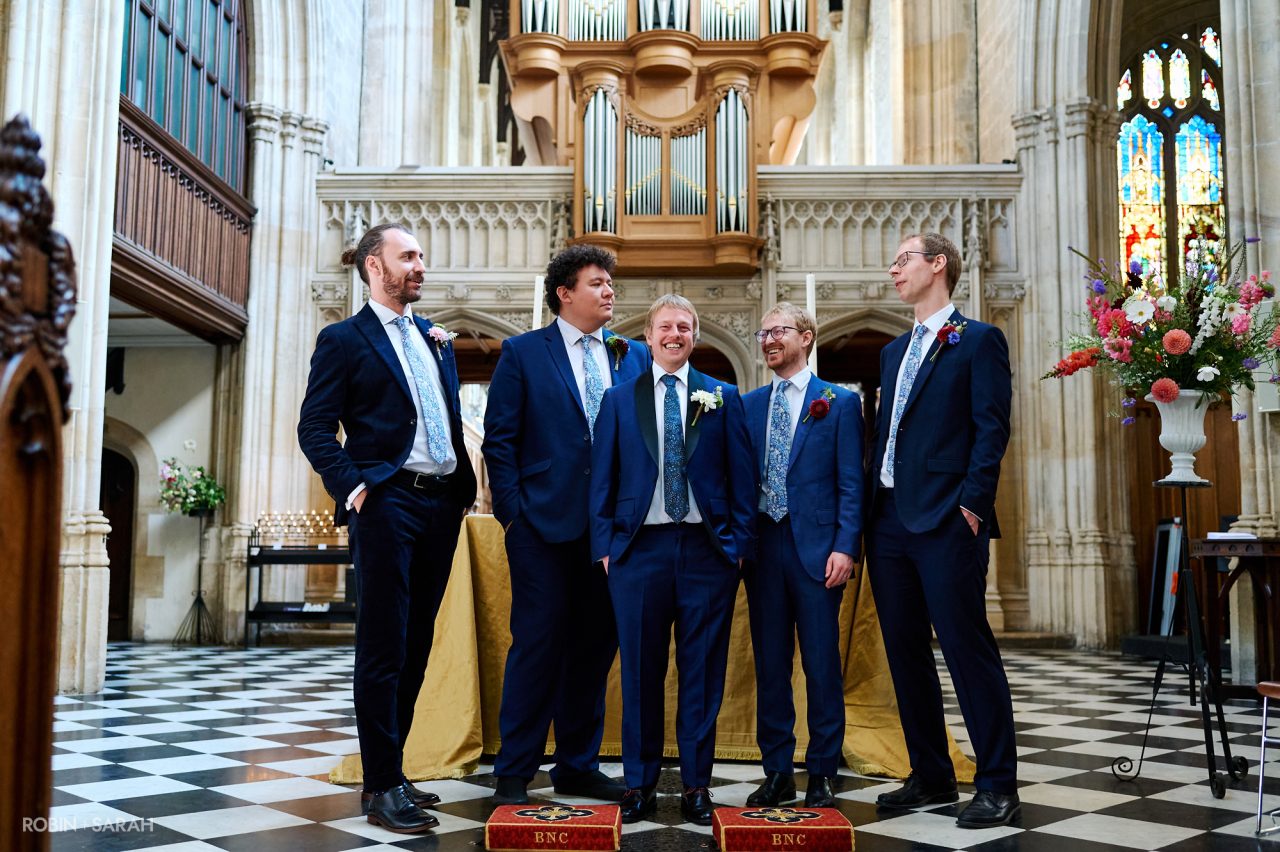
The Groom & Groomsmen
Usually, groom and groomsmen arrive at the church fairly early. This is a good opportunity for a relaxed formal portrait of the group – unhurried, natural, and done before their time is taken up with welcoming the guests.
Guest Arrivals
The photography begins before the ceremony itself. As guests arrive at the church, there’s a natural energy – old friends greeting each other, family members gathering, the gentle anticipation of what’s about to happen. We work quietly among the guests as they arrive, capturing those early moments without directing or interrupting them.
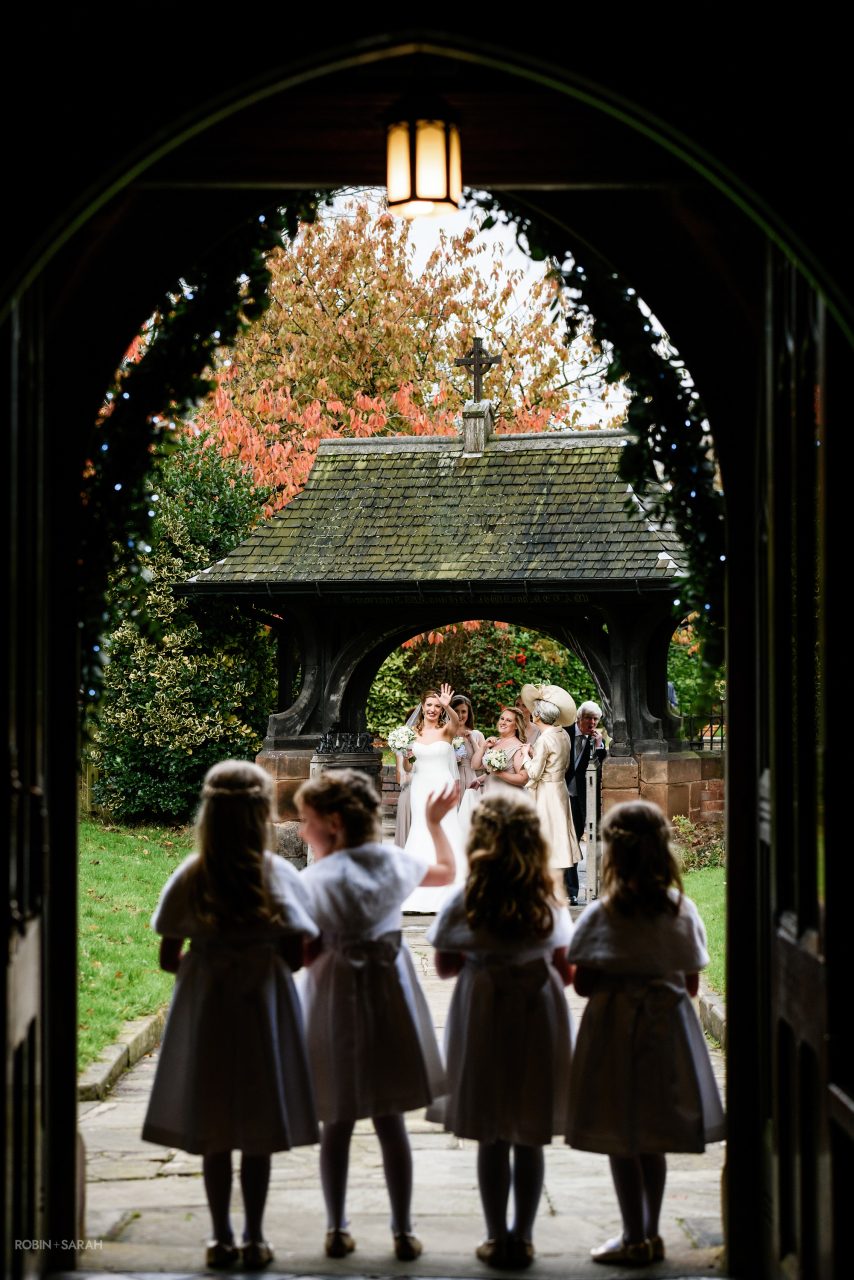
The Bride’s Arrival
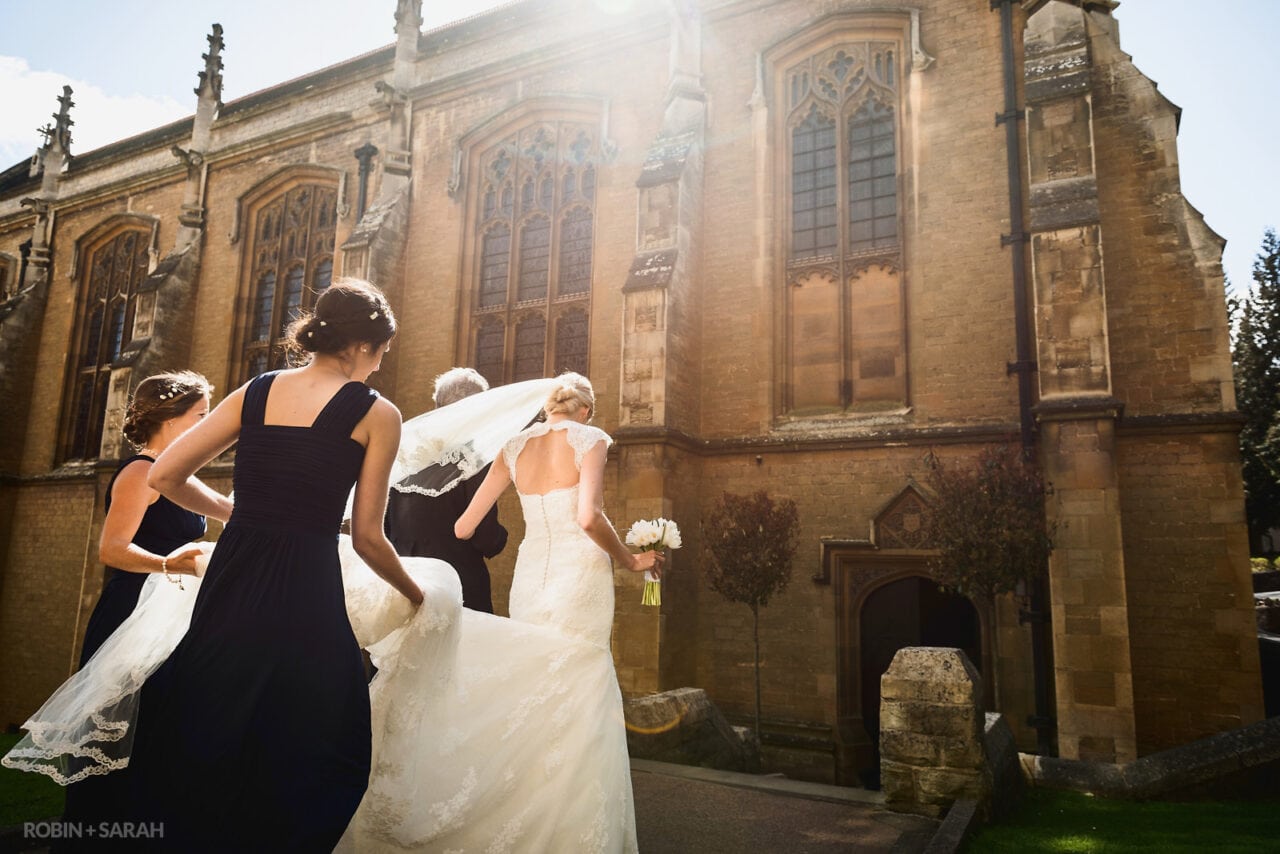
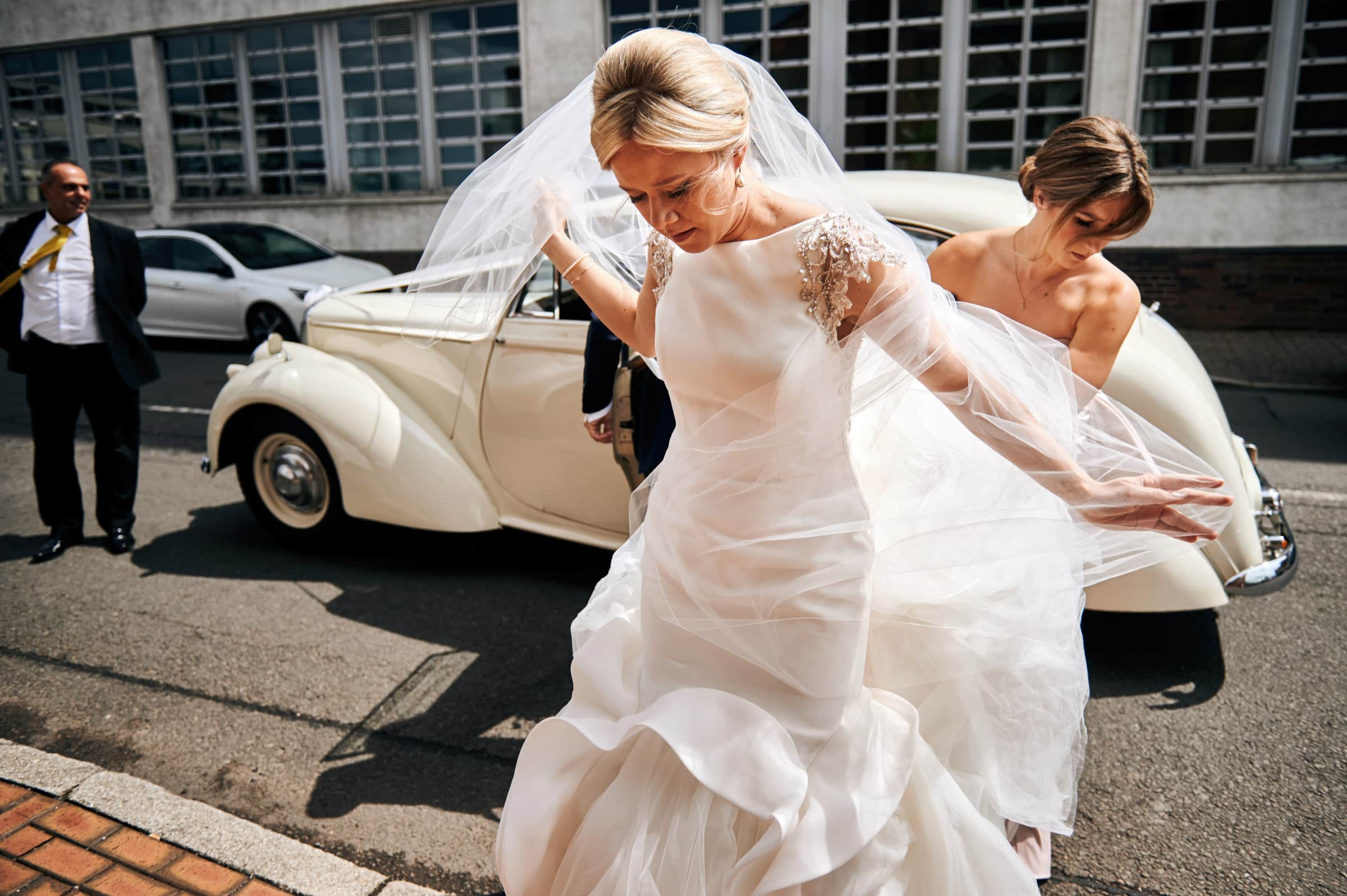
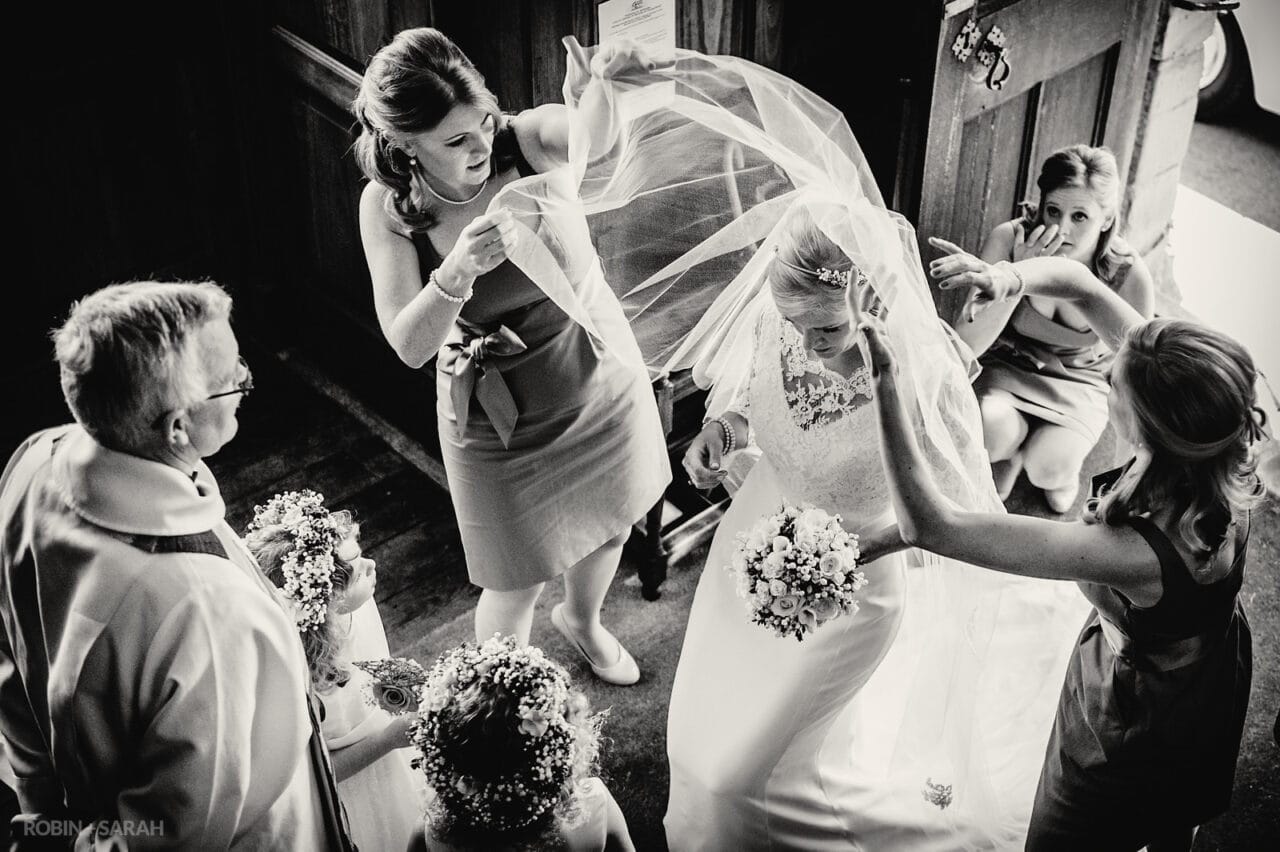
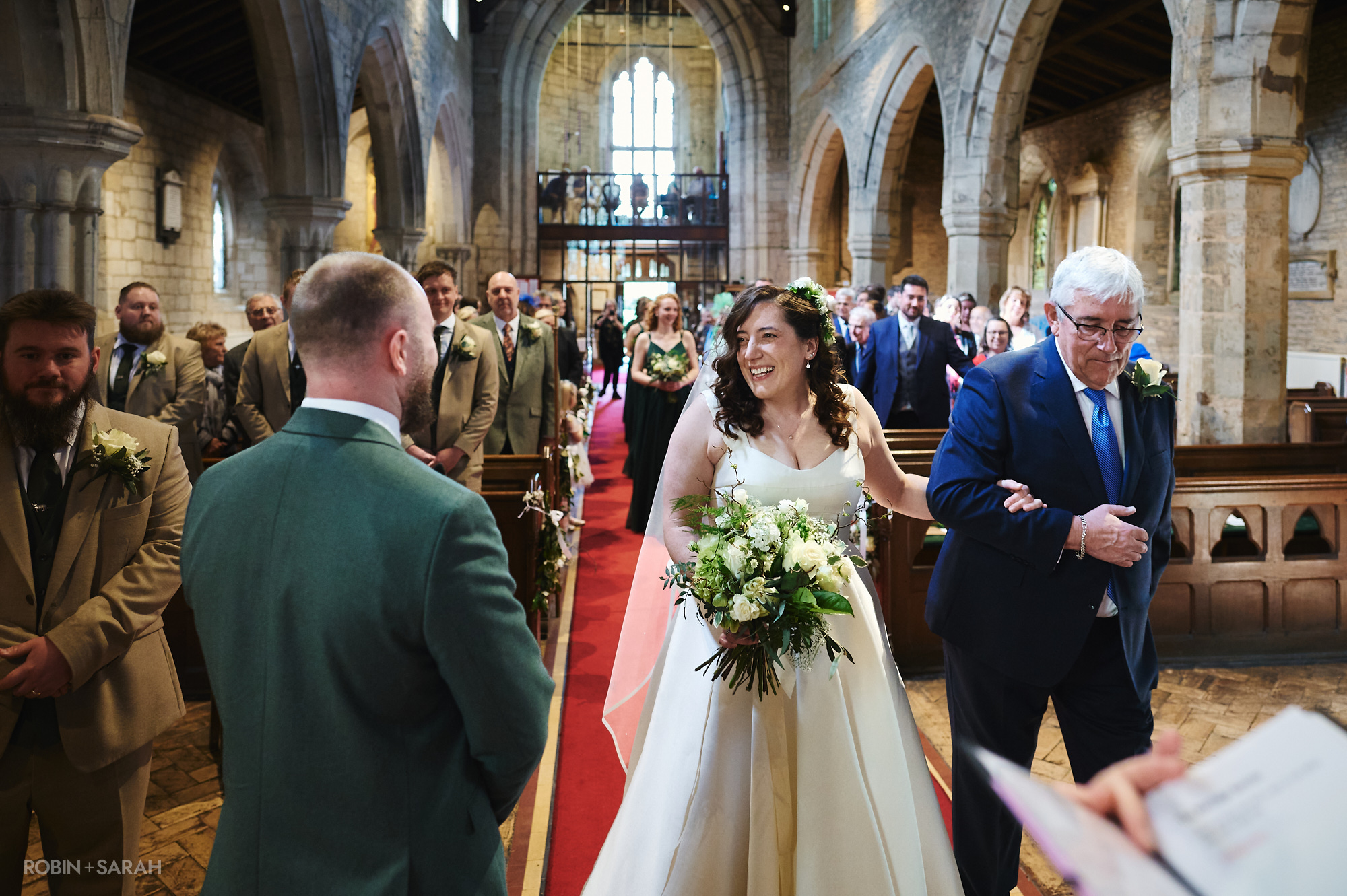
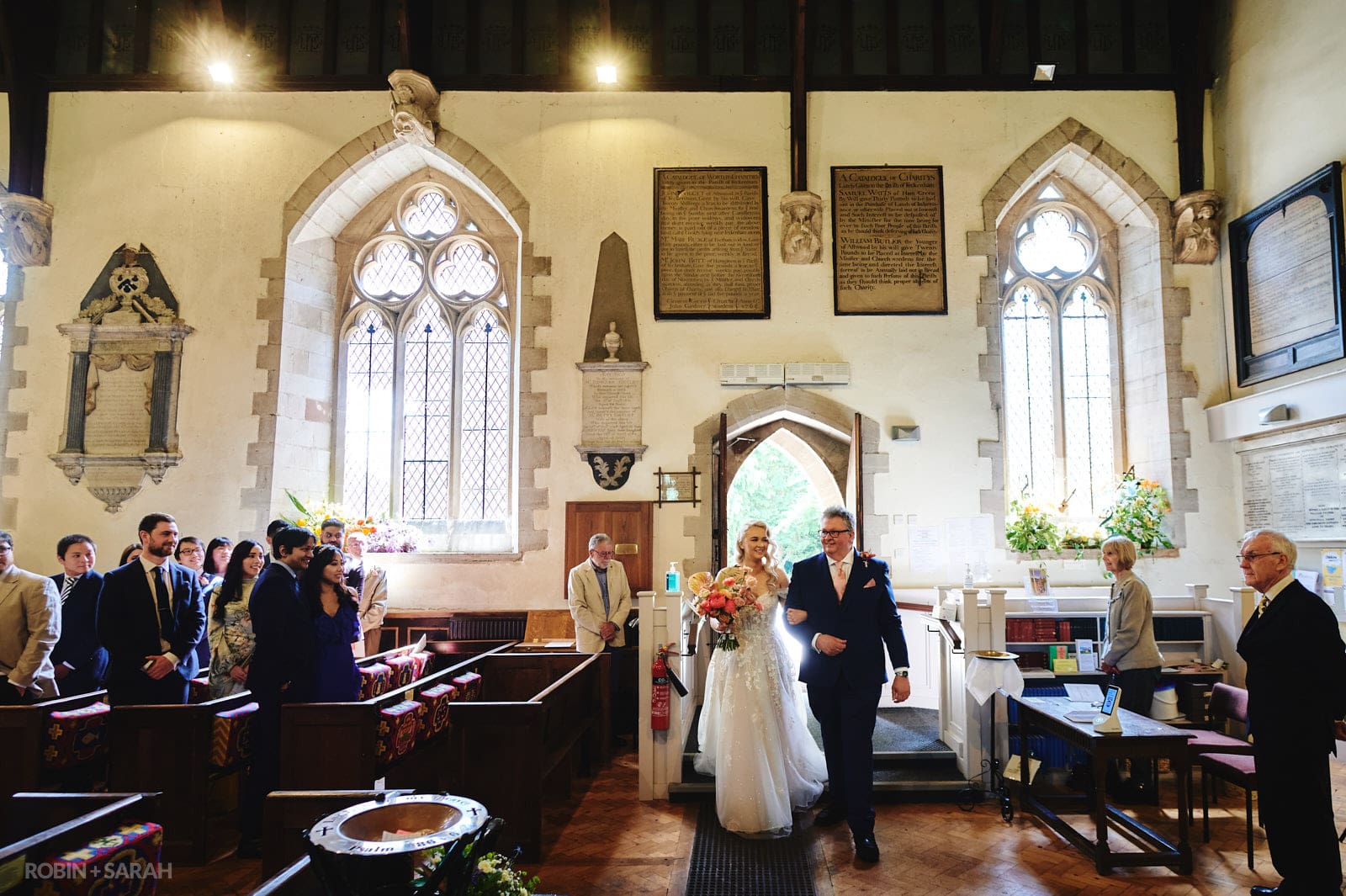
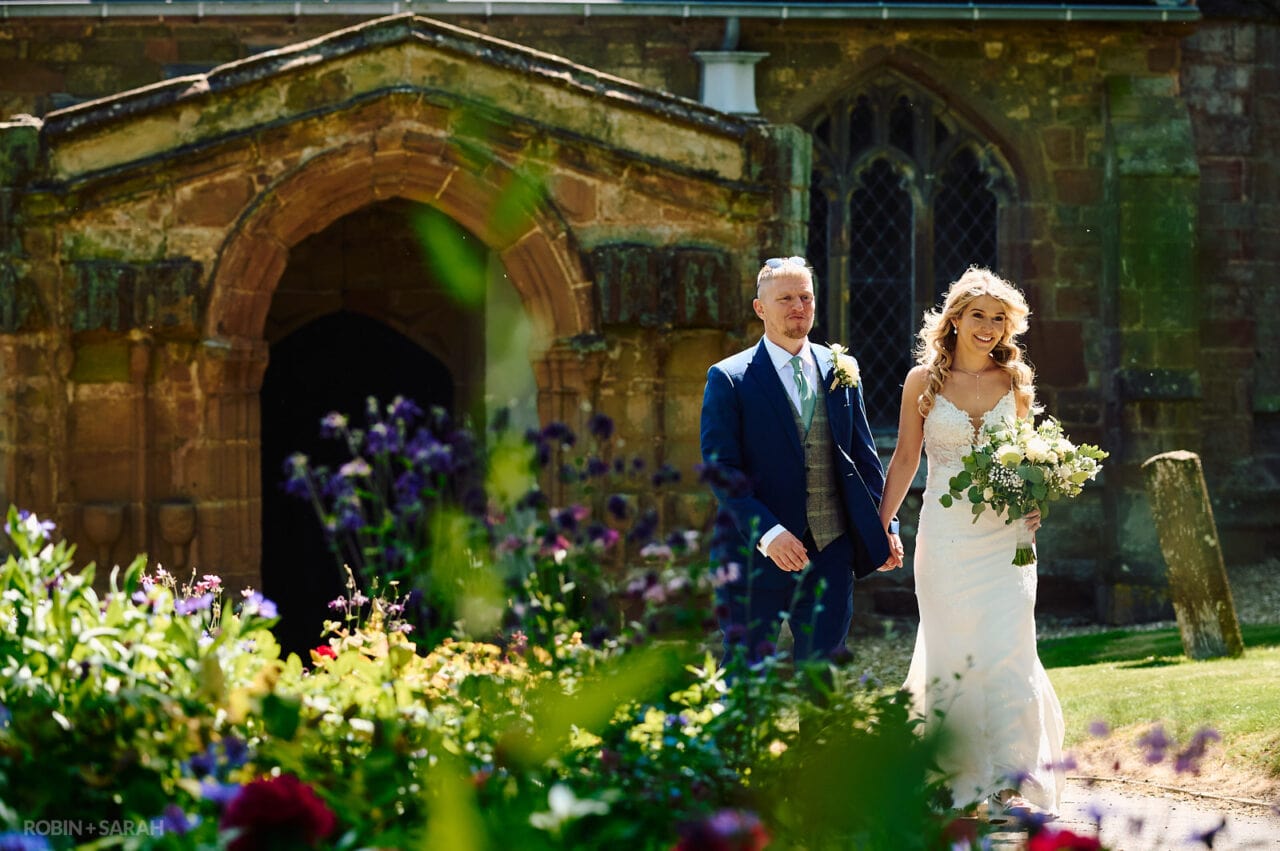
The guests are usually requested to take their seats in the church before the bride is due to arrive. The arrival of the bride is one of the most anticipated moments of the day. Whether she arrives by car, on foot, or by something more unusual, we’ll be in position to capture the moment as she makes her way to the church door.
Most churches have their own guidelines on where photographers can and can’t be during the ceremony. We always work within those — and in most cases they don’t prevent us from getting excellent coverage. We never use flash during a ceremony and we keep movement to a minimum. Also, we’re respectful of the solemnity of the ceremony itself, so we won’t be hanging over the vicar’s shoulder or making our presence felt any more than is absolutely necessary. This methodology means we can work quietly alongside the vicar or priest rather than becoming a distraction. In our experience, officiants and other church staff appreciate that approach.
The architecture, the light and the occasion do a great deal of the work — our job is to stay alert and responsive to the moments as they unfold. The exchange of vows, the rings, the first kiss, the register – all documented quietly and carefully.
What to Expect From Your Service
Church of England
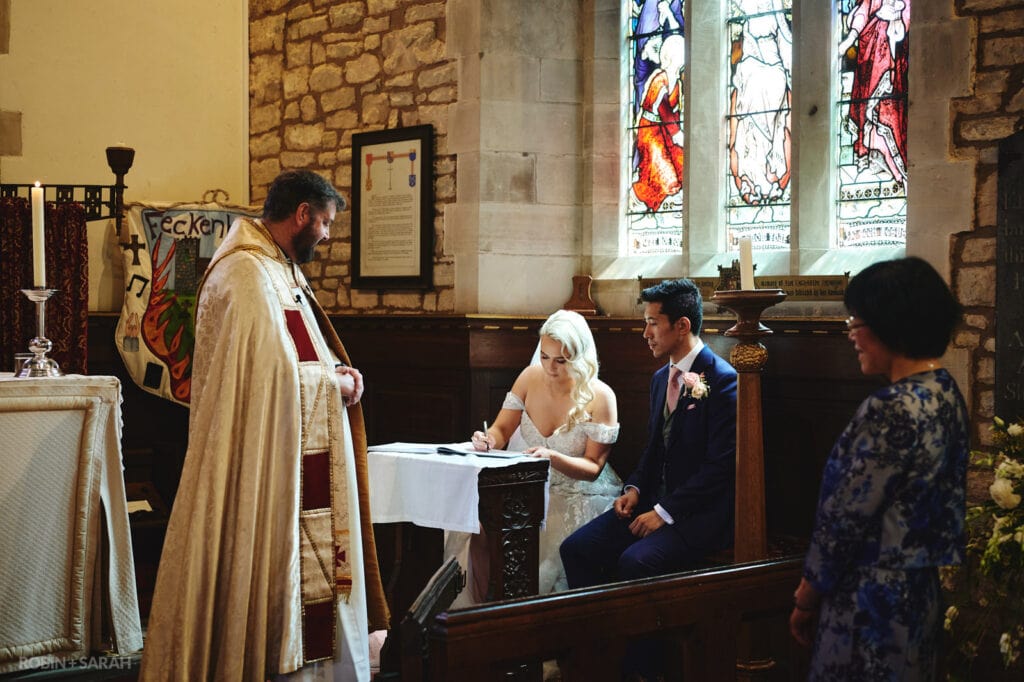
CofE services vary in style depending on the church and the vicar, but most follow a familiar pattern – hymns, readings, the exchange of vows and rings, and usually the signing of the register. The register is often signed in a side chapel or vestry, which can briefly take the couple away from the main congregation. We follow discreetly and make sure that moment is covered.
Catholic ceremonies
Catholic ceremonies share many similarities with CofE services but tend to follow a more prescribed structure. Without mass, the service runs to a similar length as a CofE ceremony. With mass included, you’re looking at considerably longer — often between 75 minutes and two hours — which actually gives more time for the photography to breathe and for quiet, unguarded moments to emerge during the longer readings and liturgy.
Some Catholic churches are a little stricter about photographer position, especially near the altar but this is usually easy to work around. Our low-profile approach tends to be well received by priests who have had difficult experiences with less considerate photographers in the past.
The Signing of the Marriage Register
The signing of the register is one of the quieter moments of a church wedding – a brief pause after the ceremony itself where the couple, their witnesses and the officiant gather together, usually at a side table or in a vestry. We tend to hang back and let it unfold naturally, keeping a respectful distance and allowing the interactions between the people involved to play out without direction. It’s often an unexpectedly intimate few minutes, and some genuinely lovely photographs come from it.
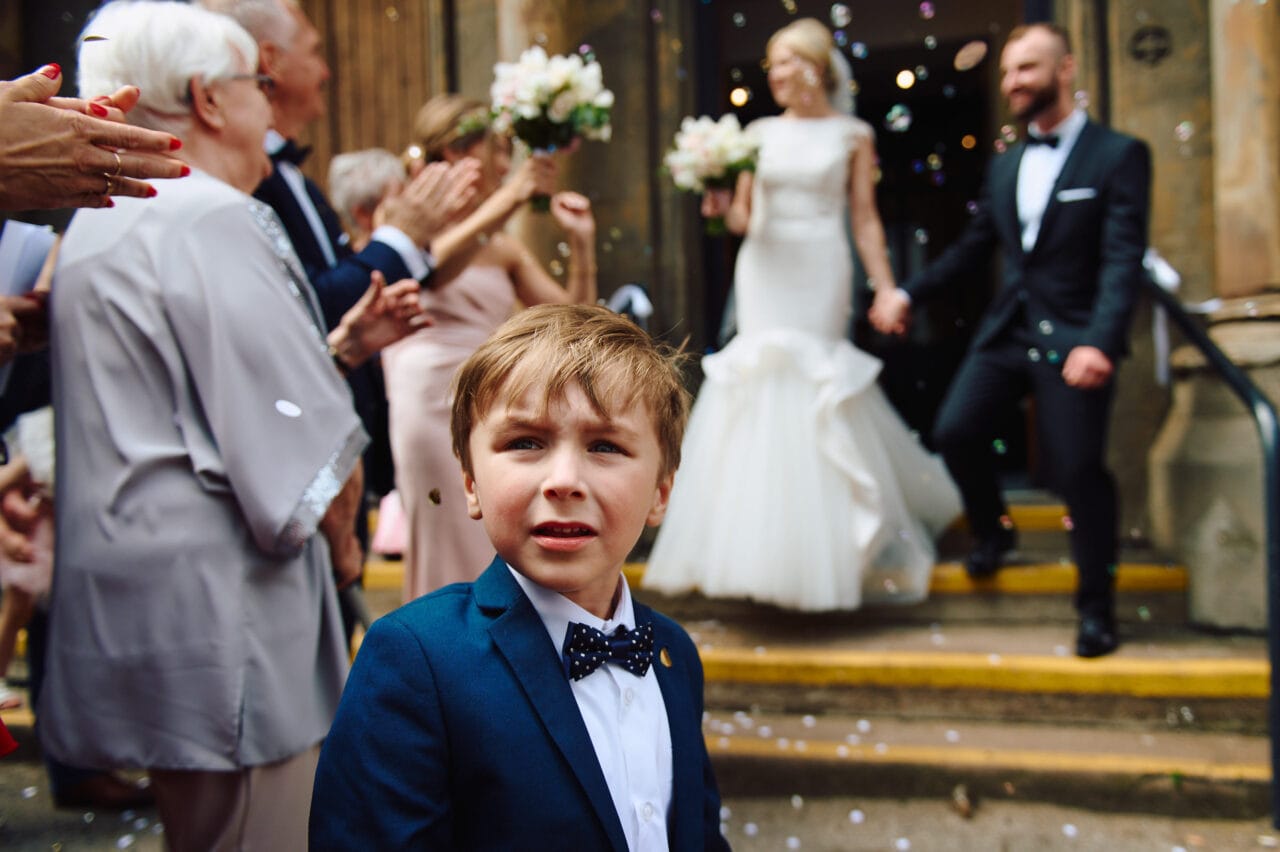
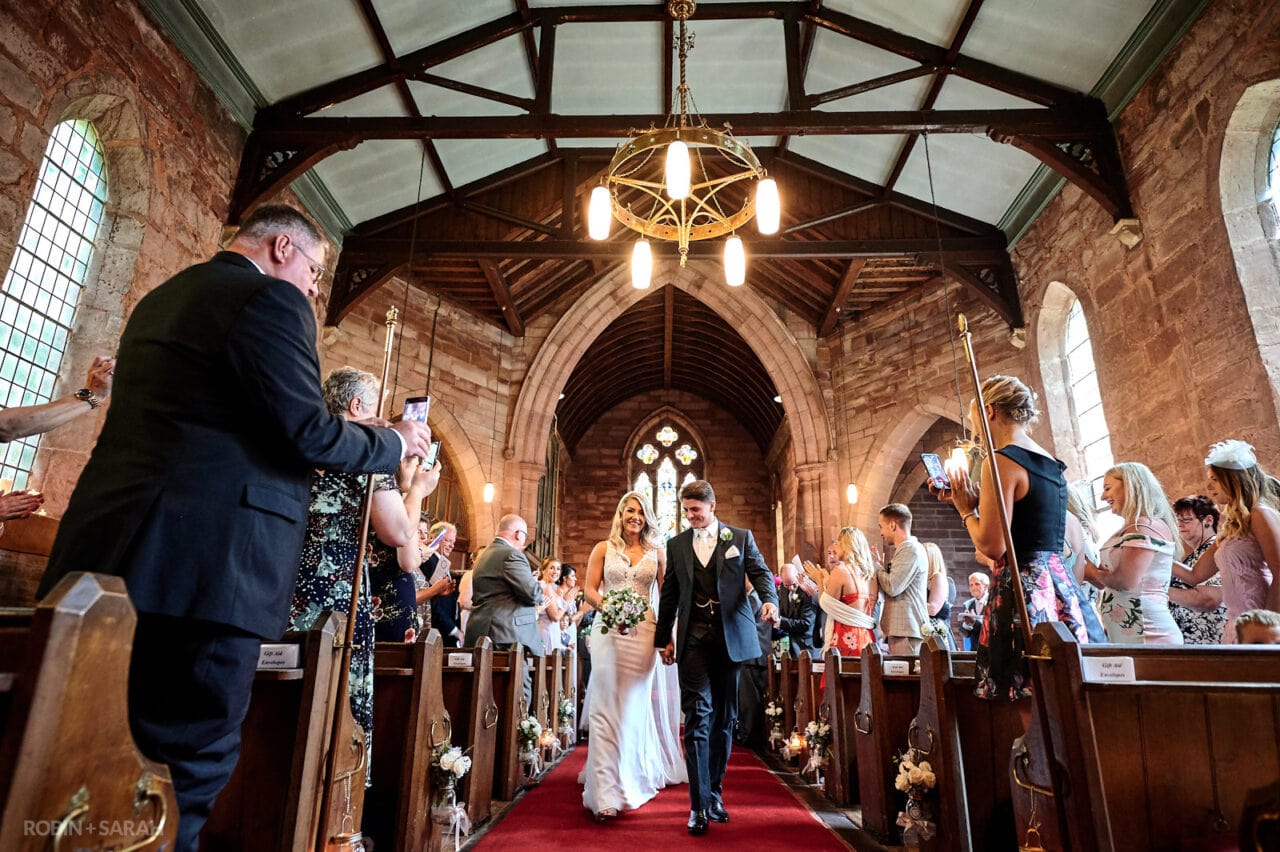
The moment the doors open and the couple emerge is one of the highlights of any church wedding. The sudden change from the quiet interior to the light and noise outside, the burst of emotion from waiting guests — it’s a transition that never gets old. We position ourselves to capture both the couple and the crowd in those first few seconds.
Tea & Cake
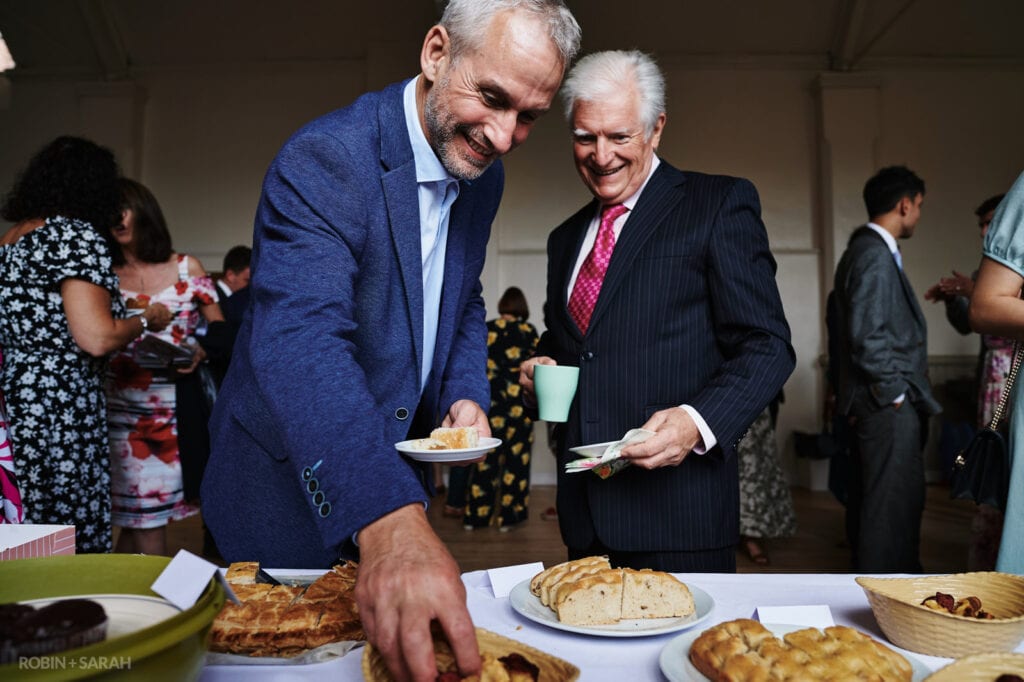
Some church weddings – particularly more community-minded congregations – include tea and cake for everyone at the end of the service, before heading outside. The cakes are often homemade by members of the congregation as well as the couple and their guests, and it creates a really lovely stretch of time for everything to decompress. People relax, conversations start, and the atmosphere shifts naturally from the formality of the ceremony into something warmer and more informal. It’s one of those unexpected touches that often produces some of the best candid photographs of the day.
Confetti
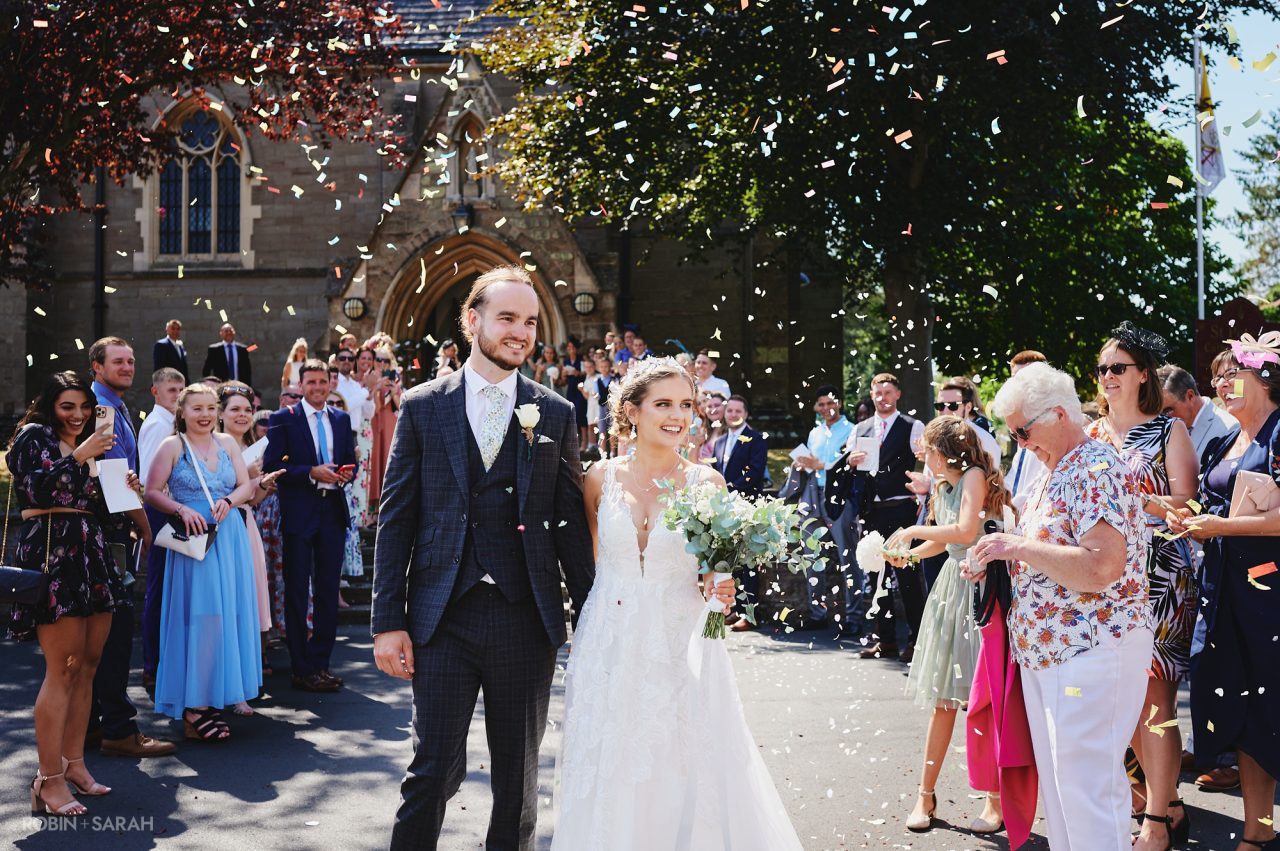
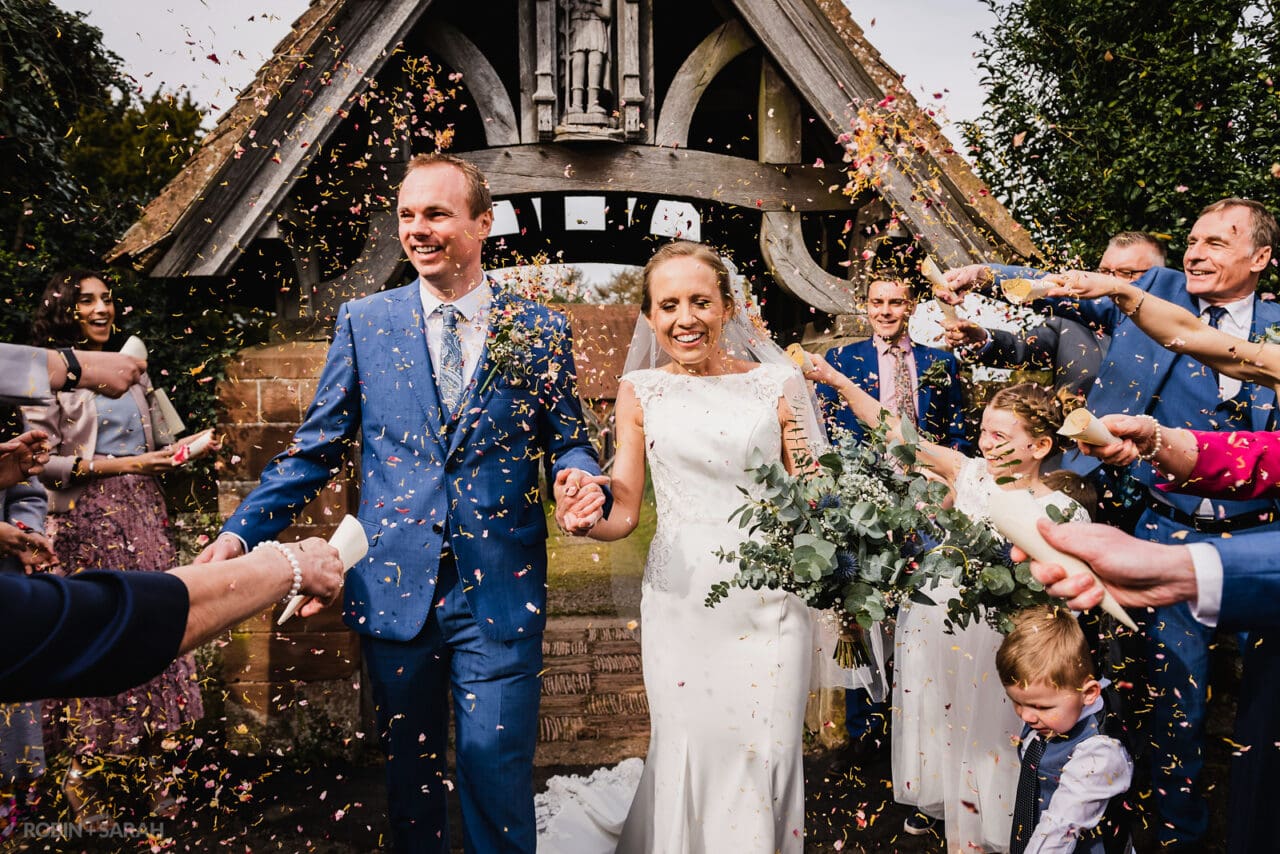
If confetti is being thrown, we’ll talk through the best way to make the most of it beforehand. The long path at many churches is ideal – it gives guests space to form a natural corridor and gives us room to work.
Arranging the confetti throw takes a little more consideration than you might think, but we’ll go through it all with you on the run-up to the day.
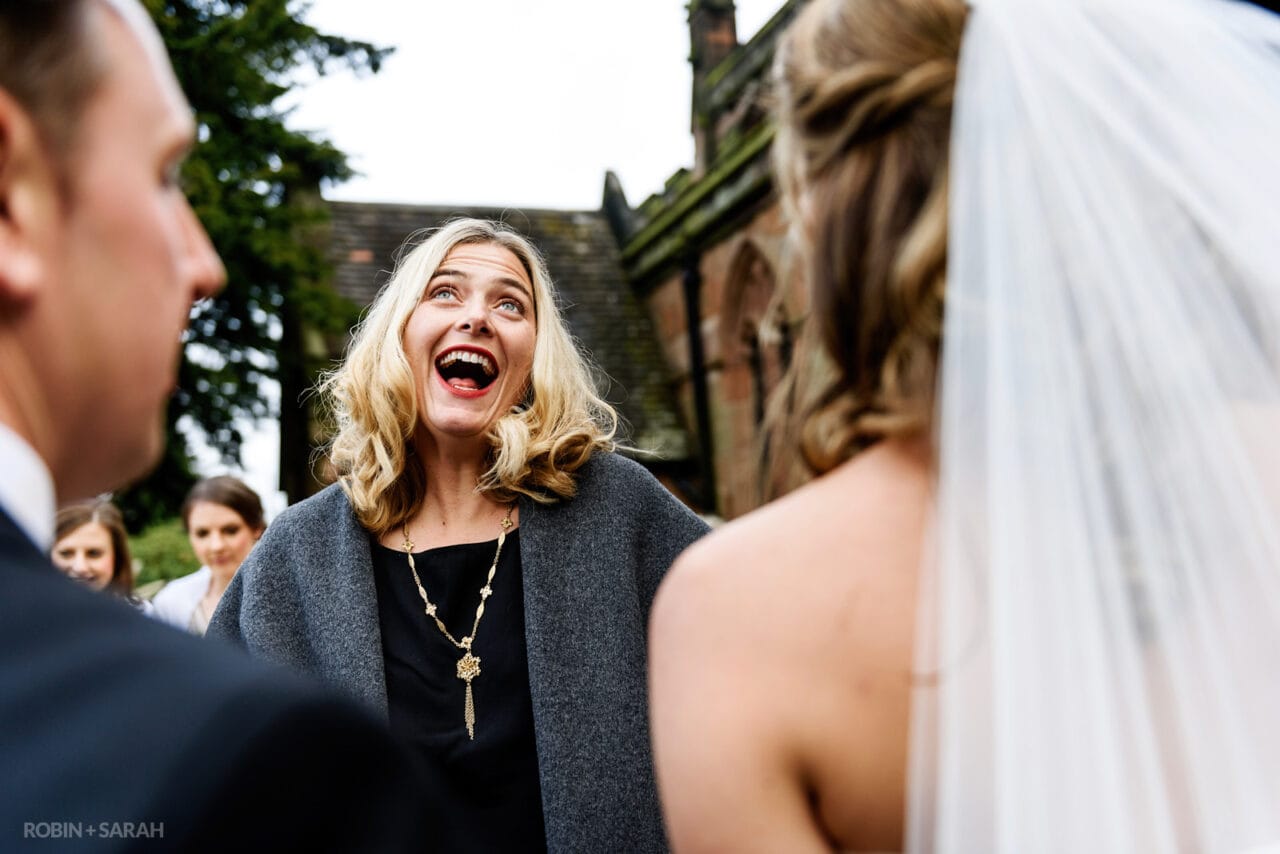
This is one of our favourite parts of any church wedding – the unscripted, unhurried stretch of time after the ceremony when the couple are surrounded by their people. Hugs, tears, laughter, old friends finding each other. We always advise couples to allow plenty of time for this to happen naturally, because it can’t be repeated and it’s often where some of the most genuinely emotional photographs of the day come from.
A Few Portraits Before You Leave
Once the guests are on their way to the reception and before leaving the churchyard, we’ll ask whether you’d like a few minutes for some relaxed couple portraits. Most couples do — a moment under the lychgate, in the main doorway, or in the churchyard itself. Nothing formal or time-consuming, just a quiet few minutes while the setting is still there and before the day moves on to the reception.
Church Weddings We’ve Photographed
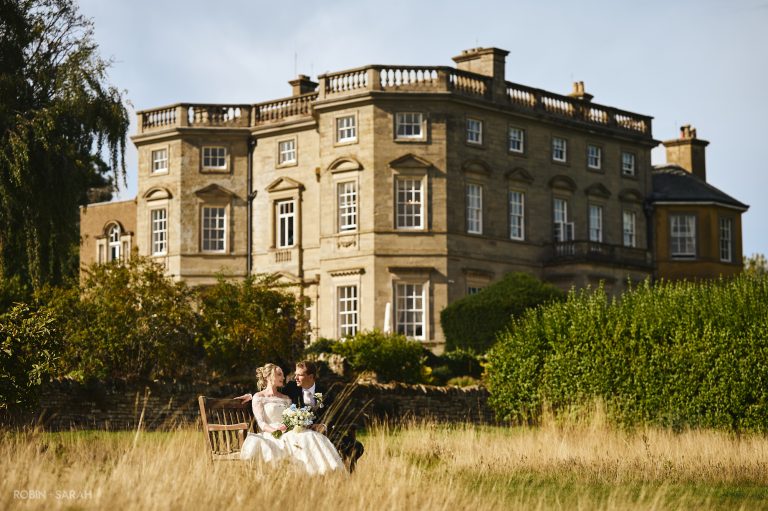
Wedding at St Botolph’s Church & Coombe Abbey
See More“Time has been a blur so we’ve not had the chance to say thank you for how great you both were on the day, making us feel super comfortable. Thank you so much for our photos we love them!!!”
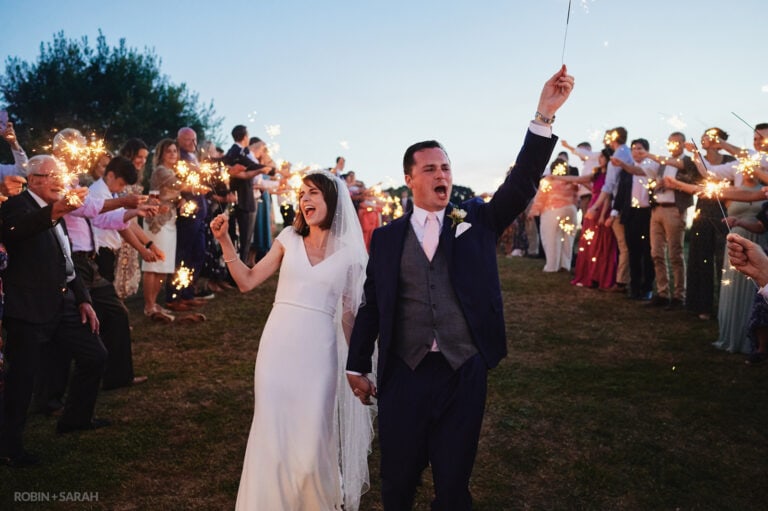
Wedding at St Peter’s Dunchurch & Wethele Manor
See More“We have been so impressed by Robin and Sarah’s creativity, using the lighting on a very hot day to create the most beautiful photos. We will certainly treasure our photos forever!”

Wedding at The Crown & Sandys, Ombersley
See More“We’ve just watched the slideshow together, happy tears were shed, they brought back some lovely memories and really capture the day, thank you! There are some real gems in there and such fantastic memories to treasure!”

Wedding at Church of the Sacred Heart & Brockencote Hall
See More“Thanks so much for the lovely photographs! We followed your wise words and watched them on the biggest screen possible and they were brilliant! Thanks once again for capturing so many excellent photos, it really brought back all the memories!”
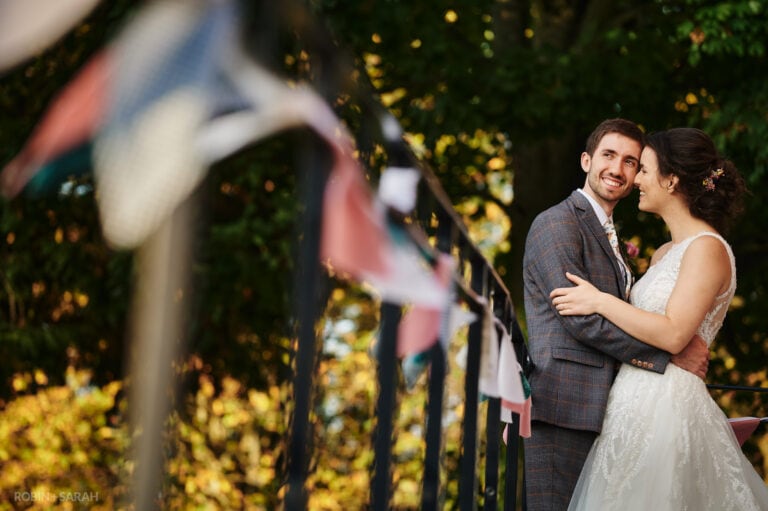
Wedding at St Pauls Leamington & Dorothea Mitchell Hall
See More“We are absolutely lost for words – you have captured the day so beautifully!”

Wedding at Bentley Village Hall
See More“Thank you so much for everything. The photos look incredible, we really loved reliving the day again, you captured so many special moments”
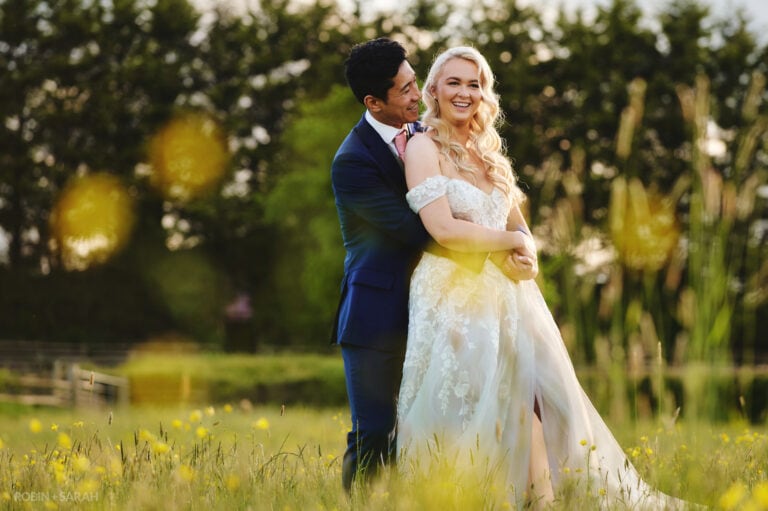
Wedding at Feckenham Church & Alcott Farm, Worcestershire
See More“They are wonderful pictures and my family have complimented them highly. I especially love the ones with the bridesmaids walking up to the church and the ones with Monty the dog in. You have captured the flower girl beautifully too, and my Grandad, which was important to me and I love the slideshow you put together.”
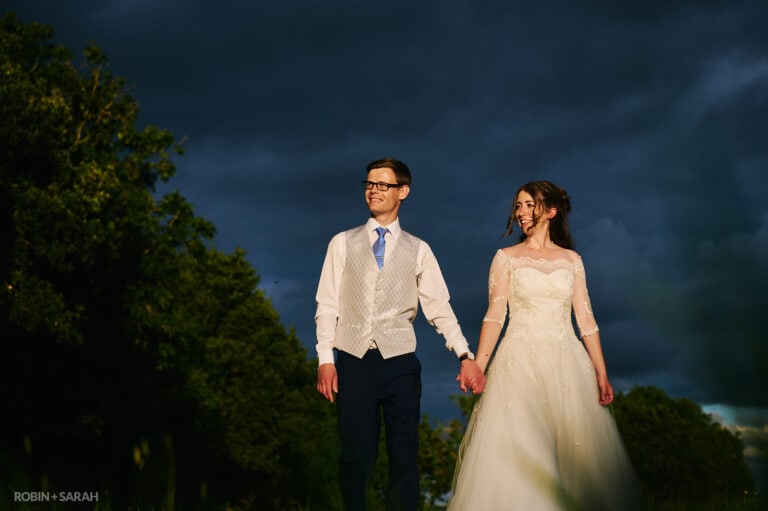
Wedding at St Faiths Kilsby & Wethele Manor
See More“Thank you so much for these and for all your help and work on the day! We did as you advised and watched the slideshow last night on a proper screen and it was like being back there! The photos are amazing. We have no idea how you seemed to be everywhere all the time! We really love them!”

Wedding at Long Buckby & Warwick Castle
See More“Thank you so much for the photographs, we absolutely love them!”

Wedding at Far Forest, Worcestershire
See More“We are absolutely delighted! What a fantastic, amazing job you’ve done of capturing our day! Over the moon! A million heartfelt thank you’s for all of your hard work! Wonderful!

Wedding at Beoley Church with Garden Reception
See More“We sat down with a glass of champagne last night and went through them all, they are beautiful. You have really captured the feel of the day!! Thank you so so much. We loved having you there.”

Wedding at St Peter’s Pedmore & Spring Grove House
See More“Their work ethic was fab and their expertise helped us with timings so we could fit in couple shots as well capturing the day as it unfolded. The photos really reflect our day brilliantly and this was sentiment shared by family and friends”
Wedding at Hanbury Church & Avoncroft Museum
See More“We were absolutely blown away. Every single picture was incredible.”

Wedding at Clent Church & Belbroughton Church Hall
See More“They were so friendly and made us instantly feel comfortable. They responded quickly to all of our questions, and made us feel like nothing was too much trouble. We are absolutely over the moon with all of our photos, they are better than we could have ever imagined!”

























Wedding at St Anne’s Church & The Cube, Birmingham
See More“Rob and Sarah knocked it out of the park for us!! Couldn’t have asked for a better team to capture our big day!”
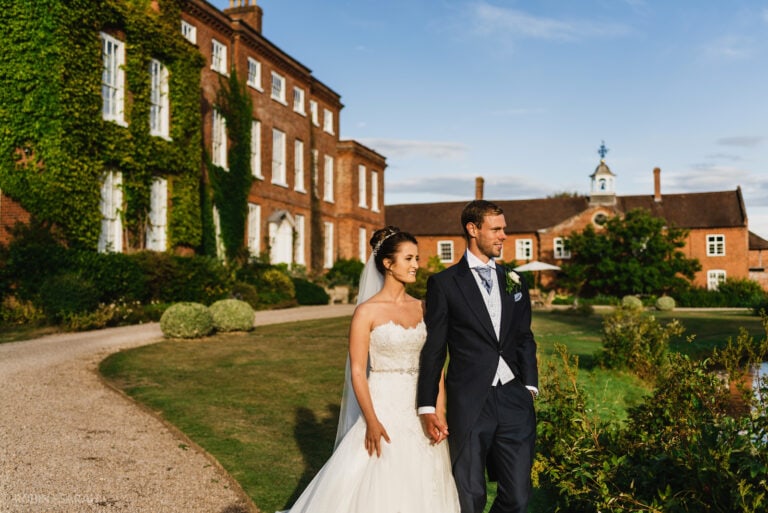
Wedding at Delbury Hall
See More“We have looked through all of the pictures and they are truly wonderful! Thank you so much, we couldn’t have asked for them to have turned out any better. We really appreciate all of the time and effort that has been put in from start to finish!”
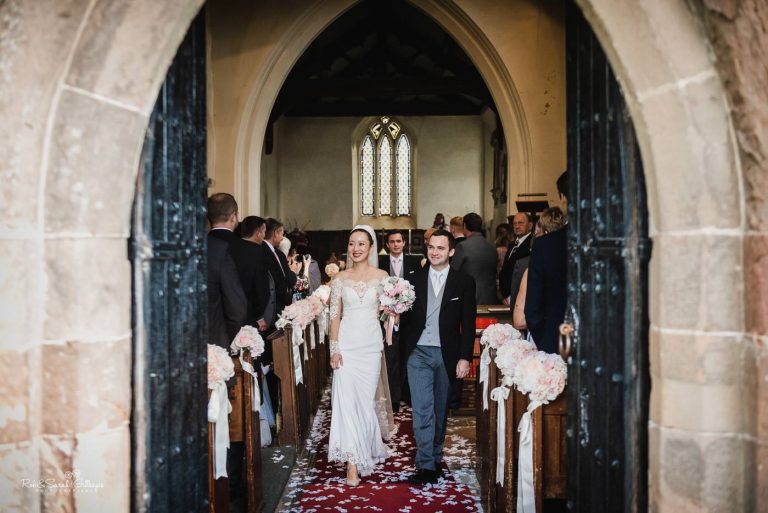
Wedding at St Peter’s Bourton & Coombe Abbey
See More“The photos are absolutely fantastic, thank you so much”

Summer Wedding at Hampton Manor
See More“You captured the joy & emotion of the day entirely! Thank you again for our beautiful photographs, looking at them really has been like reliving the most wonderful day all over again.”

Wedding at St Giles Packwood & Wethele Manor
See More“Thank you both so much for the absolutely incredible photos you took on our special day; they completely surpassed what we thought possible!”
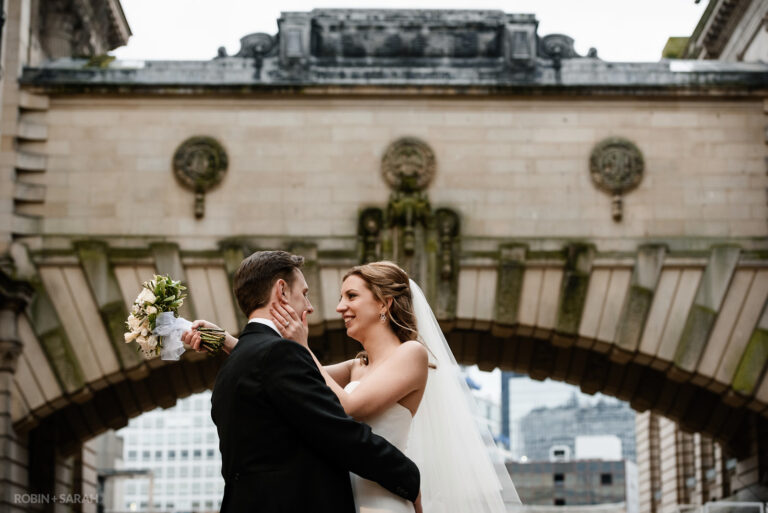
Wedding at Edgbaston Old Church & Birmingham Council House
See More“Can’t thank Robin & Sarah enough! Fantastic photos which captured our day amazingly, even better than we could have hoped for. Personally they’re such a nice couple who showed true passion for what they do.”

Wedding at Hanbury Church & Redhouse Barn
See More“In a word, wow!! We are totally blown away by how amazing these pictures are. You’ve captured the day so well and all the emotion behind it. We will treasure these pictures always. Thank you for all the hard work that went into making these. We are beyond thrilled with them!”

Wedding at Olton Friary & New Hall Hotel
See More“It’s the attention to detail from Rob and Sarah that make the photos and their service worth every penny”
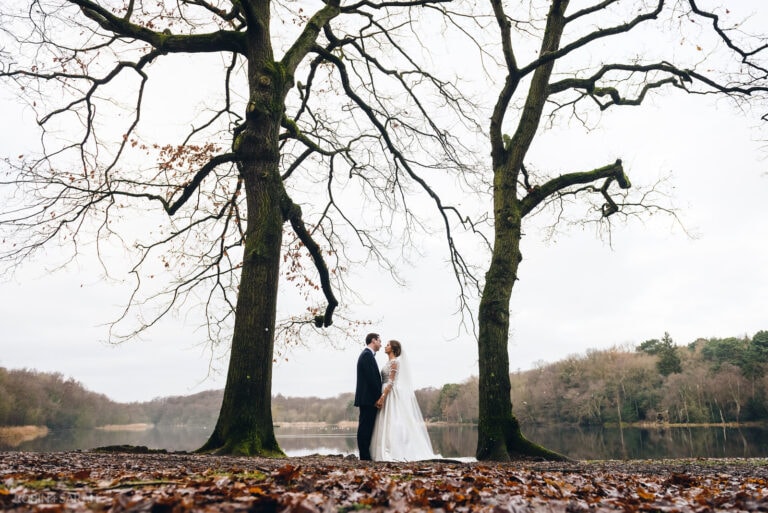
Wedding at The Bracebridge, Sutton Coldfield
See More“WE LOVE LOVE LOVE THEM!!! We really do love them, and the same for our families. Everyone is commenting on how amazing they are!”
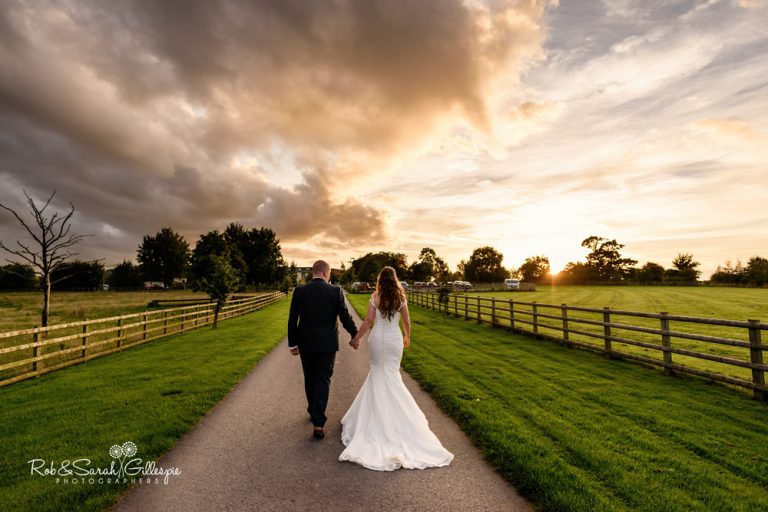
Mythe Barn Wedding
See More“They capture a story, our album is PERFECT, from the beginning of the day right until the end, could not have asked for anything more and couldn’t have been more happy with the result.”
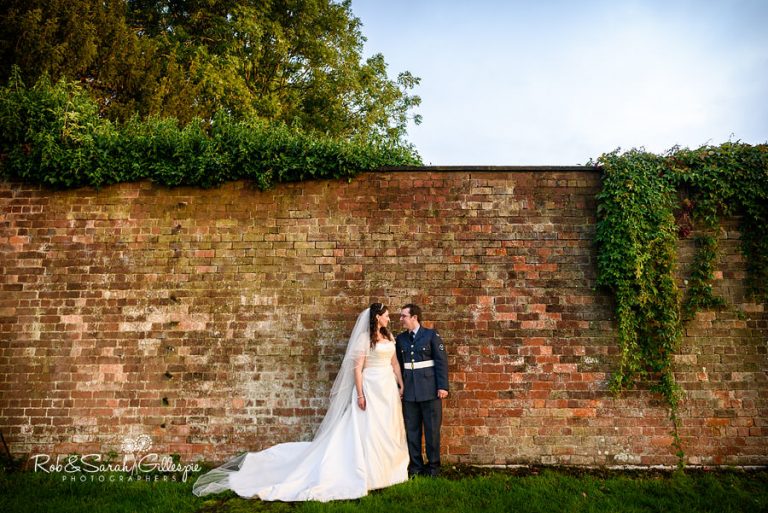
Wedding at Deerhurst Church & Puckrup Hall
See More“We can honestly say that having Robin and Sarah on our special day was the best decision we made.”
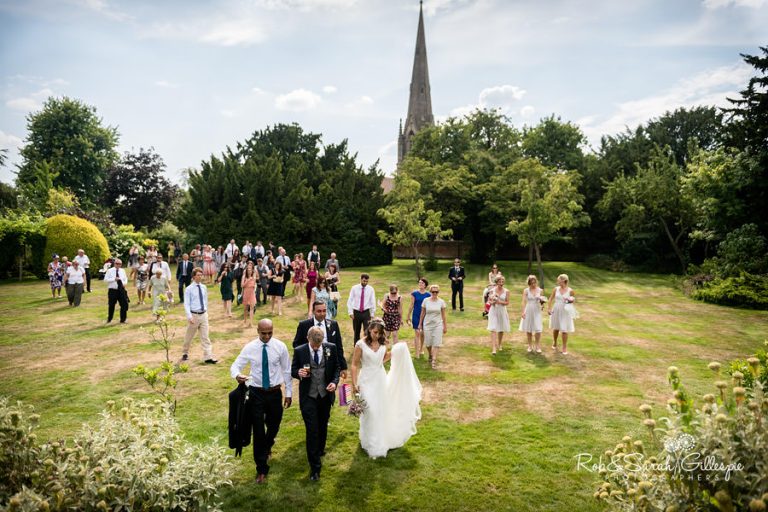
Wedding All Saints Church & Sherbourne Park
See More“Everyone commented on how hard Robin and Sarah worked. They fitted in perfectly with the flow of the day and we were pleased to have them join us as guests. Robin and Sarah have truly made us feel like friends rather than customers and that is also something we are really thankful for. We wouldn’t hesitate in recommending them!”
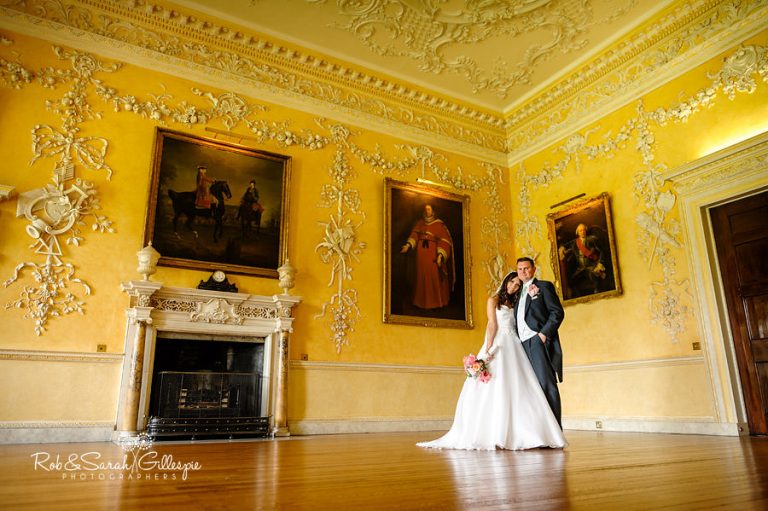
Wedding at St Columbas Church & Hagley Hall
See More“We have looked at the photos and sent the link to our family. They are such amazing pictures, thank you. Our family love them too!”

Wedding at St Mary Magdelane & Home Reception
See More“We are so excited and beyond happy with the photos they are incredible neither of us have stopped looking at them yet even on our honeymoon whenever we got wifi we were looking through them!”
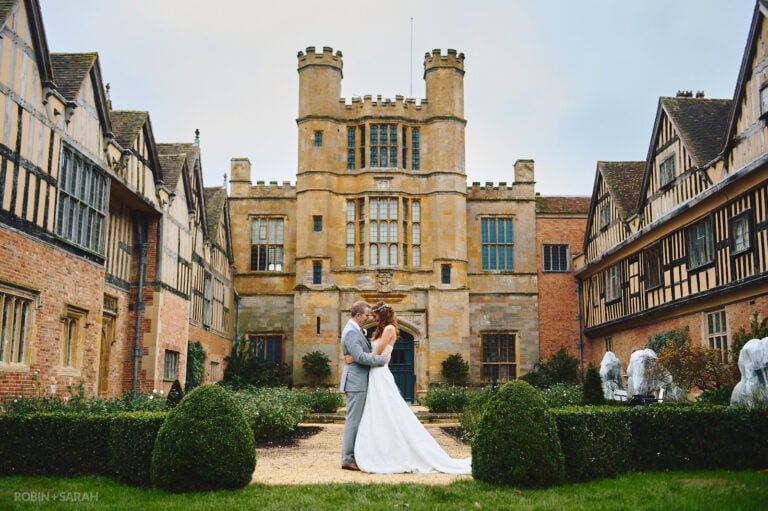
Coughton Court Wedding
See More“We love the pictures. seeing the different perspectives we would have otherwise missed. We are so pleased and excited to have looked through these.”
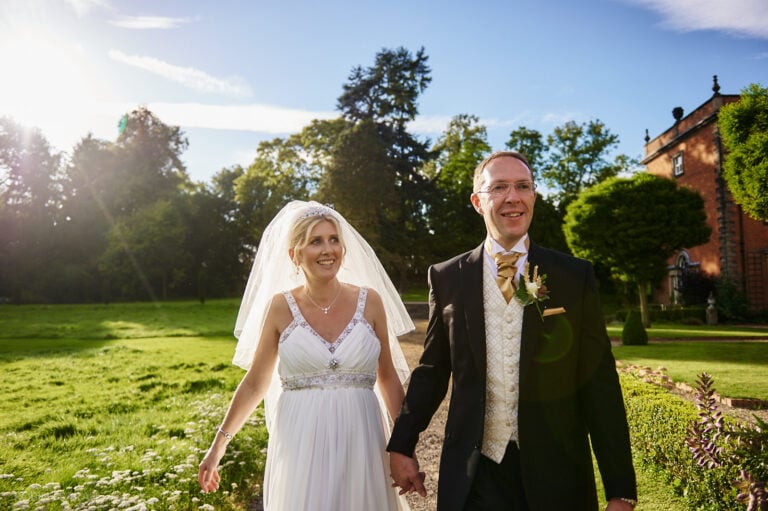
Wedding at Breedon & Staunton Harold
See More“We absolutely love them – amazing job!! We are so glad you and Sarah did our photography, so pleased.”

Learn more about our services
If you’re planning a church wedding in Worcestershire, Warwickshire or anywhere across the Midlands and you’d like to know more about our availability and pricing, we’d love to hear from you.